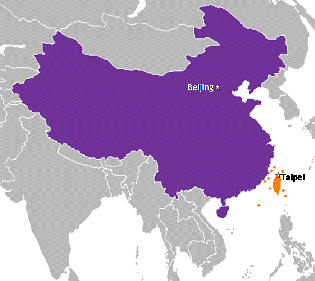
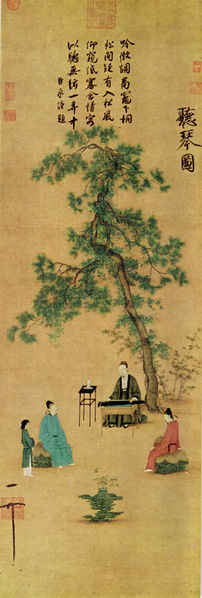
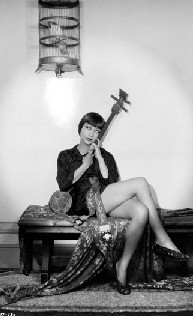
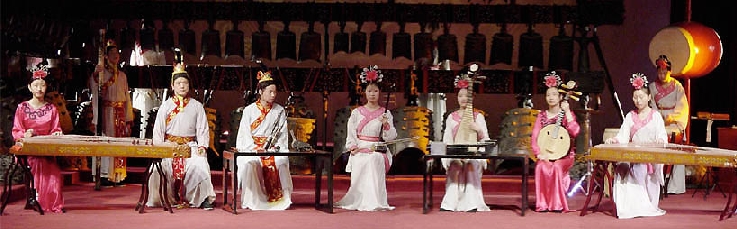
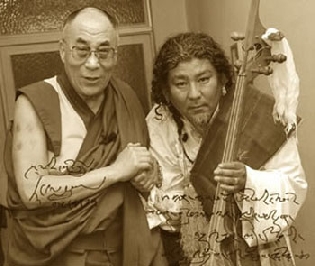
ÿþ<html> <head><title>FolkWorld Article: Chinese Music</title></head> <body bgcolor="#FFF2E6" link="#DC143C" alink="#FF3300" vlink="#4B0082"> <p><font size=4 color="4169e1"><font FACE="Maiandra GD">FolkWorld</font> Issue 36 07/2008; Article from Wikipedia, the free encyclopedia </font> </p> <center> <p><b><font color="#ff0000" size="7">Chinese Music</font><br> <font color="#008000" size="3">From Wikipedia, the free encyclopedia</font> </b></p> </center> <IMG SRC="../../p/olympics.gif" width=119 height=82 border=1 alt="" align=right hspace=10> <p><font size=4> <i>Tuning in to the Olympic Summer Games in Beijing 2008:</i> The Music of China dates back to the dawn of Chinese civilization with documents and artifacts providing evidence of a well-developed musical culture as early as the Zhou Dynasty (1122 - 256 BC). Today, Chinese Music continues a rich traditional heritage in one aspect, while emerging into a more contemporary form at the same time. </font></p> <p>The <b><a href="http://en.wikipedia.org/wiki/Music" title="Music">music</a> of <a href="http://en.wikipedia.org/wiki/China" title="China">China</a></b> dates back to the dawn of <a href="http://en.wikipedia.org/wiki/Chinese_civilization" class="mw-redirect" title="Chinese civilization">Chinese civilization</a> with documents and artifacts providing evidence of a well-developed musical culture as early as the <a href="http://en.wikipedia.org/wiki/Zhou_Dynasty" title="Zhou Dynasty">Zhou Dynasty</a> (1122 BC - 256 BC). <table align="left" bgcolor="#ffebcd" cellpadding=5 width=300 border=5 bordercolor="#FFF2E6"> <tr><td> <center> <img src="../p/chinamap.gif" width=315 height=281 alt="China Map"></center> <p><img src="../../p/china.gif" width=120 height=76 border=0 alt="China Flag" hspace=10 align=right> <font size=-1> The <b>People's Republic of China</b> (<a href="http://en.wikipedia.org/wiki/Simplified_Chinese_character" title="Simplified Chinese character">simplified Chinese</a>: <span lang="zh-Hans" xml:lang="zh-Hans"><a href="http://en.wiktionary.org/wiki/%E4%B8%AD" class="extiw" title="wikt:-N">-N</a><a href="http://en.wiktionary.org/wiki/%E5%8D%8E" class="extiw" title="wikt:NS">NS</a><a href="http://en.wiktionary.org/wiki/%E4%BA%BA" class="extiw" title="wikt:ºN">ºN</a><a href="http://en.wiktionary.org/wiki/%E6%B0%91" class="extiw" title="wikt:l">l</a><a href="http://en.wiktionary.org/wiki/%E5%85%B1" class="extiw" title="wikt:qQ">qQ</a><a href="http://en.wiktionary.org/wiki/%E5%92%8C" class="extiw" title="wikt:ŒT">ŒT</a><a href="http://en.wiktionary.org/wiki/%E5%9B%BD" class="extiw" title="wikt:ýV">ýV</a></span>; <a href="http://en.wikipedia.org/wiki/Traditional_Chinese_character" title="Traditional Chinese character">traditional Chinese</a>: <span lang="zh-Hant" xml:lang="zh-Hant"><a href="http://en.wiktionary.org/wiki/%E4%B8%AD" class="extiw" title="wikt:-N">-N</a><a href="http://en.wiktionary.org/wiki/%E8%8F%AF" class="extiw" title="wikt:ïƒ">ïƒ</a><a href="http://en.wiktionary.org/wiki/%E4%BA%BA" class="extiw" title="wikt:ºN">ºN</a><a href="http://en.wiktionary.org/wiki/%E6%B0%91" class="extiw" title="wikt:l">l</a><a href="http://en.wiktionary.org/wiki/%E5%85%B1" class="extiw" title="wikt:qQ">qQ</a><a href="http://en.wiktionary.org/wiki/%E5%92%8C" class="extiw" title="wikt:ŒT">ŒT</a><a href="http://en.wiktionary.org/wiki/%E5%9C%8B" class="extiw" title="wikt: W"> W</a></span>; <a href="http://en.wikipedia.org/wiki/Pinyin" title="Pinyin">pinyin</a>: <span lang="" xml:lang="">ZhMnghuá Rénmín Gònghéguó</span> <span class="unicode audiolink"><a href="http://upload.wikimedia.org/wikipedia/commons/e/e7/Zh-Zhonghua_renmin_gongheguo.ogg" class="internal" title="Zh-Zhonghua renmin gongheguo.ogg">listen</a></span>&#160;<span class="metadata audiolinkinfo"><small>(<a href="http://en.wikipedia.org/wiki/Wikipedia:Media_help" title="Wikipedia:Media help">help</a>·<a href="http://en.wikipedia.org/wiki/Image:Zh-Zhonghua_renmin_gongheguo.ogg" title="Image:Zh-Zhonghua renmin gongheguo.ogg">info</a>)</small></span>), commonly known as <b>China</b>, is the largest country in <a href="http://en.wikipedia.org/wiki/East_Asia" title="East Asia">East Asia</a> and <a href="http://en.wikipedia.org/wiki/List_of_countries_and_outlying_territories_by_total_area" title="List of countries and outlying territories by total area">the third or fourth largest country in the world.</a> With a population of over 1.3 billion it is the <a href="http://en.wikipedia.org/wiki/List_of_countries_by_population" title="List of countries by population">most populous country in the world</a>. <a href="http://en.wikipedia.org/wiki/Beijing" title="Beijing">Beijing</a> is the capital.</p> <p>The <b>2008 <a href="http://en.wikipedia.org/wiki/Summer_Olympics" class="mw-redirect" title="Summer Olympics">Summer Olympics</a></b> will be celebrated from <a href="http://en.wikipedia.org/wiki/August_8" title="August 8">August 8</a>, <a href="http://en.wikipedia.org/wiki/2008" title="2008">2008</a>, to <a href="http://en.wikipedia.org/wiki/August_24" title="August 24">August 24</a>, <a href="http://en.wikipedia.org/wiki/2008" title="2008">2008</a>. The Olympic slogan, <i>One World, One Dream</i>, calls upon the world to unite in the Olympic spirit. Concerns over the games include the potential for boycotts from pro-<a href="http://en.wikipedia.org/wiki/Tibet" title="Tibet">Tibetan</a> organizations such as <a href="http://en.wikipedia.org/wiki/Students_for_a_Free_Tibet" title="Students for a Free Tibet">Students for a Free Tibet</a> as well as from organizations such as <a href="http://en.wikipedia.org/wiki/Amnesty_International" title="Amnesty International">Amnesty International</a> upset with China's involvement in the crisis in Darfur. <p><a href="http://en.wikipedia.org/wiki/People%27s_Republic_of_China">People's Republic of China</a>, <a href="http://en.wikipedia.org/wiki/China">China</a>, <a href="http://en.wikipedia.org/wiki/2008_Summer_Olympics">2008 Summer Olympics</a> <br><a href="http://en.wikipedia.org/wiki/Human_rights_in_the_People%27s_Republic_of_China">Human Rights in the People's Republic of China</a> </font> </td></tr> </table> Today, the music continues a rich traditional heritage in one aspect, while emerging into a more contemporary form at the same time. In summary the commercialized segment is in <a href="http://en.wikipedia.org/wiki/Hong_Kong" title="Hong Kong">Hong Kong</a> and <a href="http://en.wikipedia.org/wiki/Taiwan" title="Taiwan">Taiwan</a>. The more diverse and sophisticated genres and aspects are in <a href="http://en.wikipedia.org/wiki/Mainland_China" title="Mainland China">mainland China</a>.</p> <p><a name="History" id="History"></a></p> <h2><span class="mw-headline">History</span></h2> <p>The legendary founder of music in <a href="http://en.wikipedia.org/wiki/Chinese_mythology" title="Chinese mythology">Chinese mythology</a> was <a href="http://en.wikipedia.org/wiki/Ling_Lun" title="Ling Lun">Ling Lun</a>, who made bamboo pipes tuned to the sounds of birds.</p> <p><a name="Dynasty_era_.281122_BC_-_1911.29" id="Dynasty_era_.281122_BC_-_1911.29"></a></p> <h3><span class="mw-headline">Dynasty era (1122 BC - 1911)</span></h3> <p>According to <i><a href="http://en.wikipedia.org/wiki/Mencius" title="Mencius">Mencius</a></i>, a powerful ruler had asked him whether it was moral if he preferred <a href="http://en.wikipedia.org/wiki/Popular_music" title="Popular music">popular music</a> to the classics. The answer was that the only thing matters being whether or not he loved his subjects. The Imperial Music Bureau, first established in the <a href="http://en.wikipedia.org/wiki/Qin_Dynasty" title="Qin Dynasty">Qin Dynasty</a> (221-207 BC), was greatly expanded under the <a href="http://en.wikipedia.org/wiki/Emperor_Han_Wu_Di" class="mw-redirect" title="Emperor Han Wu Di">Emperor Han Wu Di</a> (140-87 BC) and charged with supervising court music and military music and determining what folk music would be officially recognized. In subsequent dynasties, the development of Chinese music was strongly influenced by foreign music, especially that of <a href="http://en.wikipedia.org/wiki/Central_Asia" title="Central Asia">Central Asia</a>.</p> <p>The oldest written music is <i>Youlan</i> or the <i><a href="http://en.wikipedia.org/wiki/Solitary_Orchid" class="mw-redirect" title="Solitary Orchid">Solitary Orchid</a></i>, attributed to <a href="http://en.wikipedia.org/wiki/Confucius" title="Confucius">Confucius</a> (see <a href="http://en.wikipedia.org/wiki/Guqin" title="Guqin">guqin</a> article for a sample of tablature). The first major well-documented flowering of Chinese music was for the qin during the <a href="http://en.wikipedia.org/wiki/Tang_Dynasty" title="Tang Dynasty">Tang Dynasty</a>, though the qin is known to have been played since before the <a href="http://en.wikipedia.org/wiki/Han_Dynasty" title="Han Dynasty">Han Dynasty</a>.</p> <p>In ancient China the position of musicians was much lower than that of painters, though music was seen as central to the harmony and longevity of the state. Almost every emperor took folk songs seriously, sending officers to collect songs to inspect the popular will. One of the Confucianist Classics, <a href="http://en.wikipedia.org/wiki/Shi_Jing" title="Shi Jing">Shi Jing</a> (poets), contained many folk songs dating from <a href="http://en.wikipedia.org/wiki/800_BC" class="mw-redirect" title="800 BC">800 BC</a> to about <a href="http://en.wikipedia.org/wiki/300_BC" title="300 BC">300 BC</a>.</p> <p>The first European to reach China with a musical instrument was <a href="http://en.wikipedia.org/wiki/Jesuit" class="mw-redirect" title="Jesuit">Jesuit</a> priest <a href="http://en.wikipedia.org/wiki/Matteo_Ricci" title="Matteo Ricci">Matteo Ricci</a> who presented a <a href="http://en.wikipedia.org/wiki/Harpsichord" title="Harpsichord">Harpsichord</a> to the <a href="http://en.wikipedia.org/wiki/Ming_Dynasty" title="Ming Dynasty">Ming</a> imperial court and trained four <a href="http://en.wikipedia.org/wiki/Eunuch" title="Eunuch">eunuchs</a> how to use it in 1601.<sup id="cite_ref-Jones_0-0" class="reference"><a href="#cite_note-Jones-0" title="">[1]</a></sup></p> <p><a name="Republic_of_China_era_.281912_-_1949.29" id="Republic_of_China_era_.281912_-_1949.29"></a></p> <h3><span class="mw-headline">Republic of China era (1912 - 1949)</span></h3> <p>The <a href="http://en.wikipedia.org/wiki/New_Culture_Movement" title="New Culture Movement">New Culture Movement</a> of the 1910s and 1920s evoked a great deal of lasting interest in <a href="http://en.wikipedia.org/wiki/Western_music" title="Western music">Western music</a>. A number of Chinese musicians returned from studying abroad to perform Western classical music, composing work based on Western musical notation system. The <a href="http://en.wikipedia.org/wiki/Kuomintang" title="Kuomintang">Kuomintang</a> tried to sponsor modern music adoptions via the <a href="http://en.wikipedia.org/wiki/Shanghai_Conservatory_of_Music" title="Shanghai Conservatory of Music">Shanghai Conservatory of Music</a> despite the ongoing political crisis. 20th-century cultural philosophers like Xiao Youmei, <a href="http://en.wikipedia.org/wiki/Cai_Yuanpei" title="Cai Yuanpei">Cai Yuanpei</a>, <a href="http://en.wikipedia.org/wiki/Feng_Zikai" title="Feng Zikai">Feng Zikai</a> and Wang Guangqi wanted to see Chinese music adopted to the best standard possible. There were many different opinions regarding the best standard.<sup id="cite_ref-Jones_0-1" class="reference"><a href="#cite_note-Jones-0" title="">[1]</a></sup></p> <p><a href="http://en.wikipedia.org/wiki/Symphony_orchestra" class="mw-redirect" title="Symphony orchestra">Symphony orchestras</a> were formed in most major cities and performed to a wide audience in the concert halls and on <a href="http://en.wikipedia.org/wiki/Radio" title="Radio">radio</a>. Many of the performers added <a href="http://en.wikipedia.org/wiki/Jazz" title="Jazz">jazz</a> influences to traditional music, adding <a href="http://en.wikipedia.org/wiki/Xylophone" title="Xylophone">xylophones</a>, <a href="http://en.wikipedia.org/wiki/Saxophone" title="Saxophone">saxophones</a> and <a href="http://en.wikipedia.org/wiki/Violin" title="Violin">violins</a>, among other instruments. <a href="http://en.wikipedia.org/wiki/L%C3%BC_Wencheng" title="Lü Wencheng">Lü Wencheng</a>, <a href="http://en.wikipedia.org/wiki/Li_Jinhui" title="Li Jinhui">Li Jinhui</a>, <a href="http://en.wikipedia.org/wiki/Zhou_Xuan" title="Zhou Xuan">Zhou Xuan</a>, Qui Hechou, <a href="http://en.wikipedia.org/wiki/Yin_Zizhong" title="Yin Zizhong">Yin Zizhong</a> and <a href="http://en.wikipedia.org/wiki/He_Dasha" title="He Dasha">He Dasha</a> were among the most popular performers and composers during this period.</p> <p>After the 1942 Yan'an Forum on Literature and Art, a large-scale campaign was launched in the <a href="http://en.wikipedia.org/wiki/Communist_Party_of_China" title="Communist Party of China">Communist</a> controlled areas to adapt folk music to create revolutionary songs to educate the largely illiterate rural population on party goals. <img src="../p/huizong.jpg" width=202 height=598 alt="Song Huizong, Listening to the Qin" hspace=10 vspace=10 align=right> Musical forms considered superstitious or anti-revolutionary were repressed, and <a href="http://en.wikipedia.org/wiki/Harmony" title="Harmony">harmonies</a> and bass lines were added to traditional songs. One example is <a href="http://en.wikipedia.org/wiki/The_East_Is_Red" title="The East Is Red">The East Is Red</a>, a folksong from northern <a href="http://en.wikipedia.org/wiki/Shaanxi" title="Shaanxi">Shaanxi</a> which was adapted into a nationalist hymn. Of particular note is the composer, <a href="http://en.wikipedia.org/wiki/Xian_Xinghai" title="Xian Xinghai">Xian Xinghai</a>, who was active during this period, and composed the <a href="http://en.wikipedia.org/wiki/Yellow_River_Cantata" title="Yellow River Cantata">Yellow River Cantata</a> which is the most well-known of all of his works.</p> <p><a name="People.27s_Republic_of_China_era_.281949_-_1990s.29" id="People.27s_Republic_of_China_era_.281949_-_1990s.29"></a></p> <h3><span class="mw-headline">People's Republic of China era (1949 - 1990s)</span></h3> <p>The golden age of <a href="http://en.wikipedia.org/wiki/Shidaiqu" title="Shidaiqu">shidaiqu</a> and the <a href="http://en.wikipedia.org/wiki/Seven_great_singing_stars" title="Seven great singing stars">Seven great singing stars</a> would come to an end when the <a href="http://en.wikipedia.org/wiki/Communist_Party_of_China" title="Communist Party of China">Communist party</a> denounce <a href="http://en.wikipedia.org/wiki/C-pop" title="C-pop">Chinese popular music</a> as <a href="http://en.wikipedia.org/wiki/Yellow_Music" title="Yellow Music">yellow music</a> (<a href="http://en.wikipedia.org/wiki/Pornography" title="Pornography">pornography</a>).<sup id="cite_ref-Broughton_1-0" class="reference"><a href="#cite_note-Broughton-1" title="">[2]</a></sup> <a href="http://en.wikipedia.org/wiki/Maoism" title="Maoism">Maoists</a> considered pop music as a decline to the art form in the mainland. In 1949 the <a href="http://en.wikipedia.org/wiki/Kuomintang" title="Kuomintang">Kuomintang</a> relocated to Taiwan, and the <a href="http://en.wikipedia.org/wiki/People%27s_Republic_of_China" title="People's Republic of China">People's Republic of China</a> was established. <a href="http://en.wikipedia.org/wiki/Guoyue" title="Guoyue">Revolutionary songs</a> would become heavily promoted by the state. The <a href="http://en.wikipedia.org/wiki/Cultural_Revolution" title="Cultural Revolution">Cultural Revolution</a> and other <a href="http://en.wikipedia.org/wiki/Maoist" class="mw-redirect" title="Maoist">Maoist</a> made revolutionary songs an acceptable genre to the point where it overshadowed other genre and almost define what mainland music is.</p> <p>After the <a href="http://en.wikipedia.org/wiki/Tiananmen_Square_protests_of_1989" title="Tiananmen Square protests of 1989">Tiananmen Square protests of 1989</a>, a new fast tempo <a href="http://en.wikipedia.org/wiki/Northwest_Wind" title="Northwest Wind">Northwest Wind</a> (xibeifeng, ‰S¨˜) style was launched by the people to counter the government. The music would progress into <a href="http://en.wikipedia.org/wiki/Chinese_rock" class="mw-redirect" title="Chinese rock">Chinese rock</a>, which remained popular in the 1990s. However, music in China is very much state-owned as the TV, media, and major concert halls are all controlled by the Communist party. The government mainly chose not to support Chinese rock by limiting its exposure and airtime. As a result, the genre never reached the mainstream in its entirety.</p> <p><a name="Current" id="Current"></a></p> <h2><span class="mw-headline">Current</span></h2> <p>China has a high <a href="http://en.wikipedia.org/wiki/Piracy" title="Piracy">piracy</a> rate along with issues of <a href="http://en.wikipedia.org/wiki/Intellectual_property" title="Intellectual property">intellectual properties</a>.<sup id="cite_ref-2" class="reference"><a href="#cite_note-2" title="">[3]</a></sup> As a result, most albums are released in <a href="http://en.wikipedia.org/wiki/Taiwan" title="Taiwan">Taiwan</a> or <a href="http://en.wikipedia.org/wiki/Hong_Kong" title="Hong Kong">Hong Kong</a> first. It is often one of the business decisions made by record companies. Normally there is some delay before the products are released into the mainland, with occasional exceptions, such as the work of <a href="http://en.wikipedia.org/wiki/Cui_Jian" title="Cui Jian">Cui Jian</a> who was released in Taiwan, Hong Kong and the mainland simultaneously.<sup id="cite_ref-Gunde_3-0" class="reference"><a href="#cite_note-Gunde-3" title="">[4]</a></sup> Consequently, a delay in release time is also the biggest driver of piracy, since individuals would rather pirate from the outside. Modern market is not only hindered by <a href="http://en.wikipedia.org/wiki/Right" title="Right">rights</a> issues, as there are many other factors such as <a href="http://en.wikipedia.org/wiki/Profit_margin" title="Profit margin">profit margin</a>, <a href="http://en.wikipedia.org/wiki/Income" title="Income">income</a> and other economical questions.</p> <p>Annual events such as the <a href="http://en.wikipedia.org/wiki/Midi_Modern_Music_Festival" title="Midi Modern Music Festival">Midi Modern Music Festival</a> in <a href="http://en.wikipedia.org/wiki/Beijing" title="Beijing">Beijing</a> do keep music culture alive. There was also the "Snow Mountain Music Festival" in <a href="http://en.wikipedia.org/wiki/Yunnan_province" class="mw-redirect" title="Yunnan province">Yunnan province</a> 2002. The term "Chinese Woodstock" has been thrown around by Western media for these two events. Both draw sizable crowds outdoor, but the term is not quite official. The <a href="http://en.wikipedia.org/wiki/Chinese_rock" class="mw-redirect" title="Chinese rock">Chinese rock</a> movement differed from its Western counterpart in that it never fully made it into mainstream culture due to restrictions by the state.</p> <p>Today, rock music is centered on almost exclusively in Beijing and Shanghai, and has very limited influence over Chinese society. <a href="http://en.wikipedia.org/wiki/Wuhan" title="Wuhan">Wuhan</a> and <a href="http://en.wikipedia.org/wiki/Sichuan" title="Sichuan">Sichuan</a> are sometimes considered pockets of rock music culture as well. It points to a significant cultural, political and social difference that exist between China, the West, or even different parts within China. While rock has existed in China for decades, the milestone that put the genre on the international map is when <a href="http://en.wikipedia.org/wiki/Cui_Jian" title="Cui Jian">Cui Jian</a> played with <a href="http://en.wikipedia.org/wiki/The_Rolling_Stones" title="The Rolling Stones">The Rolling Stones</a> in 2003, at the age of 42.</p> <p><a name="Modern_music" id="Modern_music"></a></p> <h2><span class="mw-headline">Modern music</span></h2> <p>These are genres that started after 1912 to coincide with the <a href="http://en.wikipedia.org/wiki/New_China" class="mw-redirect" title="New China">New China</a>.</p> <p><a name="Pop_music" id="Pop_music"></a></p> <h3><span class="mw-headline">Pop music</span></h3> <dl> <dd> <div class="noprint relarticle mainarticle"><i>Main articles: <a href="http://en.wikipedia.org/wiki/C-pop" title="C-pop">c-pop</a> and <a href="http://en.wikipedia.org/wiki/Mandopop" title="Mandopop">mandopop</a></i></div> </dd> </dl> <p>C-pop originally began with the <a href="http://en.wikipedia.org/wiki/Shidaiqu" title="Shidaiqu">shidaiqu</a> genre founded by <a href="http://en.wikipedia.org/wiki/Li_Jinhui" title="Li Jinhui">Li Jinhui</a> in the mainland, with Western jazz influences from the likes of <a href="http://en.wikipedia.org/wiki/Buck_Clayton" title="Buck Clayton">Buck Clayton</a>. After the Communist Party establishment, the <a href="http://en.wikipedia.org/wiki/Baak_Doi" class="mw-redirect" title="Baak Doi">Baak Doi</a> record company ended up leaving Shanghai in 1952.<sup id="cite_ref-Shoesmith_4-0" class="reference"><a href="#cite_note-Shoesmith-4" title="">[5]</a></sup> <img src="../../35/p/wong.jpg" width=193 height=316 alt="Mae Wong" align=left hspace=10 vspace=10> The <a href="http://en.wikipedia.org/wiki/1970s" title="1970s">1970s</a> saw the rise of <a href="http://en.wikipedia.org/wiki/Cantopop" title="Cantopop">cantopop</a> in Hong Kong, and later <a href="http://en.wikipedia.org/wiki/Mandopop" title="Mandopop">mandopop</a> in Taiwan. The mainland remained on the sideline for decades with minimal degree of participation. Only in recent years did the youth in mainland resume as a consumer for the Taiwan mandopop market. Still, China is not yet considered a major production hub despite having the largest population<sup id="cite_ref-Keane_5-0" class="reference"><a href="#cite_note-Keane-5" title="">[6]</a></sup>. The mainland censorship is strict on popular music even today. When Hong Kong's icon <a href="http://en.wikipedia.org/wiki/Anita_Mui" title="Anita Mui">Anita Mui</a> performed the song "Bad Girl" during the 1990s in China, she was banned from returning to the concert for showing a rebellious attitude.<sup id="cite_ref-Baranovitch_6-0" class="reference"><a href="#cite_note-Baranovitch-6" title="">[7]</a></sup> By Western standards, the performance was no more rebellious than say, <a href="http://en.wikipedia.org/wiki/Madonna_%28entertainer%29" title="Madonna (entertainer)">Madonna</a> for example; since Mui based a lot of her dance moves on Madonna's style. Many mainland artists often try to start their commercial success in Hong Kong or Taiwan first, and then re-import into the mainland as part of the <a href="http://en.wikipedia.org/wiki/Gangtai" title="Gangtai">gangtai</a> culture.</p> <p><a name="Hip_hop_.26_rap" id="Hip_hop_.26_rap"></a></p> <h3><span class="mw-headline">Hip hop &amp; rap, rock &amp; heavy metal</span></h3> <dl> <dd><i>Main articles: <a href="http://en.wikipedia.org/wiki/Chinese_rap" class="mw-redirect" title="Chinese rap">Chinese rap</a>, <a href="http://en.wikipedia.org/wiki/Hong_Kong_hip_hop" title="Hong Kong hip hop">Hong Kong hip hop</a>, <a href="http://en.wikipedia.org/wiki/Taiwanese_hip_hop" title="Taiwanese hip hop">Taiwanese hip hop</a>, <a href="http://en.wikipedia.org/wiki/Chinese_rock" class="mw-redirect" title="Chinese rock">Chinese rock</a> </i></dd> </dl> <p>The widely-acknowledged forefather of Chinese rock is <a href="http://en.wikipedia.org/wiki/Cui_Jian" title="Cui Jian">Cui Jian</a>.<sup id="cite_ref-Gunde_3-1" class="reference"><a href="#cite_note-Gunde-3" title="">[4]</a></sup> In the late 1980s he played the first Chinese rock song called: "I Have Nothing" ("Yi wu suo you"). It was the first time an <a href="http://en.wikipedia.org/wiki/Electric_guitar" title="Electric guitar">electric guitar</a> was used in China. He became the most famous performer of the time, and by 1988 he performed at a concert broadcasted worldwide in conjunction with the <a href="http://en.wikipedia.org/wiki/1988_Summer_Olympics" title="1988 Summer Olympics">Seoul Summer Olympic Games</a>.<sup id="cite_ref-Gunde_3-2" class="reference"><a href="#cite_note-Gunde-3" title="">[4]</a></sup> His socially critical lyrics earned him the anger of the government and many of his concerts were banned or cancelled. After the <a href="http://en.wikipedia.org/wiki/Tiananmen_Square_protests_of_1989" title="Tiananmen Square protests of 1989">Tiananmen Square protests of 1989</a>, he played with a red blindfold around his head as an action against the government.</p> <p>Following, two bands became famous: Hei Bao (Black Panther) and <a href="http://en.wikipedia.org/wiki/Tang_Dynasty_%28band%29" title="Tang Dynasty (band)">Tang Dynasty</a>. Both started during the late <a href="http://en.wikipedia.org/wiki/1980s" title="1980s">1980s</a> and early <a href="http://en.wikipedia.org/wiki/1990s" title="1990s">1990s</a>. Hei Bao is an old-school rock band whose first CD, <i>Hei Bao</i> used the popular English song ("Don't Break My Heart"). <a href="http://en.wikipedia.org/wiki/Tang_Dynasty_%28band%29" title="Tang Dynasty (band)">Tang Dynasty</a> was the first Chinese <a href="http://en.wikipedia.org/wiki/Heavy_metal" class="mw-redirect" title="Heavy metal">heavy metal</a> band. Its first CD "A Dream Return to Tang Dynasty" combines elements of traditional <a href="http://en.wikipedia.org/wiki/Chinese_opera" title="Chinese opera">Chinese opera</a> and old school heavy metal. The album was a major breakthrough releasing around 1991/1992. Unfortunately, one member of Tang Dynasty died shortly after the release.</p> <p>Around 1994-96: the first <a href="http://en.wikipedia.org/wiki/Thrash_metal" title="Thrash metal">thrash metal</a> band, Chao Zai (<a href="http://en.wikipedia.org/wiki/Overload_%28Chinese_rock_band%29" title="Overload (Chinese rock band)">Overload</a>), was formed. They released three CDs, the last one in cooperation with pop singer <a href="http://en.wikipedia.org/wiki/Gao_Qi_%28musician%29" title="Gao Qi (musician)">Gao Chi</a> of the split-up band The Breathing.</p> <p><a name="Punk_rock" id="Punk_rock"></a></p> <h3><span class="mw-headline">Punk rock</span></h3> <p><a href="http://en.wikipedia.org/wiki/Punk_rock" title="Punk rock">Punk rock</a> became famous in China around 1994 - 1996. The first Chinese artist of the genre was <a href="http://en.wikipedia.org/wiki/He_Yong_%28rock_musician%29" title="He Yong (rock musician)">He Yong</a> of <a href="http://en.wikipedia.org/wiki/Nu_metal" title="Nu metal">nu metal</a> style, influenced by <a href="http://en.wikipedia.org/wiki/Limp_Bizkit" title="Limp Bizkit">Limp Bizkit</a>, <a href="http://en.wikipedia.org/wiki/Linkin_Park" title="Linkin Park">Linkin Park</a> and others.</p> <p>Around <a href="http://en.wikipedia.org/wiki/1995" title="1995">1995</a> the first wave of Chinese punk bands appeared in <a href="http://en.wikipedia.org/wiki/Beijing" title="Beijing">Beijing</a>, and the second generation followed around 1997. <img src="../p/shanghai.jpg" width=331 height=233 hspace=10 vspace=10 alt="Chinese musicians at a restaurant in Shanghai" align=right> Many were inspired by Western bands such as <a href="http://en.wikipedia.org/wiki/Korn" title="Korn">Korn</a>, <a href="http://en.wikipedia.org/wiki/Limp_Bizkit" title="Limp Bizkit">Limp Bizkit</a> or <a href="http://en.wikipedia.org/wiki/Linkin_Park" title="Linkin Park">Linkin Park</a>. China would have their own with <a href="http://en.wikipedia.org/wiki/Yaksa_%28band%29" title="Yaksa (band)">Yaksa</a>, Twisted Machine, AK-47, Overheal Tank.</p> <p><a name="National_music" id="National_music"></a></p> <h2><span class="mw-headline">National music</span></h2> <p><a name="Patriotic_.2F_Revolutionary" id="Patriotic_.2F_Revolutionary"></a></p> <h3><span class="mw-headline">Patriotic / Revolutionary</span></h3> <dl> <dd> <div class="noprint relarticle mainarticle"><i>Main article: <a href="http://en.wikipedia.org/wiki/Guoyue" title="Guoyue">Guoyue</a></i></div> </dd> </dl> <p>Guoyue are basically music performed on some grand presentation to encourage national pride. Since 1949, it has been by far the most government-promoted genre. Compared to other forms of music, symphonic national music flourished throughout the country. In 1969 the <a href="http://en.wikipedia.org/wiki/Cantata" title="Cantata">cantata</a> was adapted to a <a href="http://en.wikipedia.org/wiki/Piano_concerto" title="Piano concerto">piano concerto</a>. The <a href="http://en.wikipedia.org/wiki/Yellow_River_Piano_Concerto" title="Yellow River Piano Concerto">Yellow River Piano Concerto</a> was performed by the pianist <a href="http://en.wikipedia.org/wiki/Yin_Chengzong" title="Yin Chengzong">Yin Chengzong</a>, and is still performed today on global stages. During the height of the <a href="http://en.wikipedia.org/wiki/Cultural_Revolution" title="Cultural Revolution">Cultural Revolution</a>, musical composition and performance were greatly restricted. A form of soft, harmonic, generic, pan-Chinese music called <a href="http://en.wikipedia.org/wiki/Guoyue" title="Guoyue">guoyue</a> was artificially created to be performed at conservatories. After the Cultural Revolution, musical institutions were reinstated and musical composition and performance revived. At the height of the <a href="http://en.wikipedia.org/wiki/Mao_Zedong" title="Mao Zedong">Mao Zedong</a> era, the music accelerated at the political level into "Revolutionary Music" leaning toward cult status and becoming mainstream under pro-Communist ideology.</p> <p><a name="Traditional_music" id="Traditional_music"></a></p> <h2><span class="mw-headline">Traditional music</span></h2> <p><a name="Instrumental" id="Instrumental"></a></p> <h3><span class="mw-headline">Instrumental</span></h3> <dl> <dd> <div class="noprint relarticle mainarticle"><i>Main article: <a href="http://en.wikipedia.org/wiki/Traditional_Chinese_musical_instruments" class="mw-redirect" title="Traditional Chinese musical instruments">Traditional Chinese musical instruments</a></i></div> </dd> </dl> <p>Traditional music in China is played on <a href="http://en.wikipedia.org/wiki/Solo_%28music%29" title="Solo (music)">solo</a> instruments or in small ensembles of plucked and bowed stringed instruments, flutes, and various cymbals, gongs, and drums. The <a href="http://en.wikipedia.org/wiki/Chinese_musicology" title="Chinese musicology">scale</a> has five notes. <a href="http://en.wikipedia.org/wiki/Chinese_flutes" title="Chinese flutes">Bamboo pipes</a> and <a href="http://en.wikipedia.org/wiki/Guqin" title="Guqin">qin</a> are among the oldest known <a href="http://en.wikipedia.org/wiki/Musical_instrument" title="Musical instrument">musical instruments</a> from <a href="http://en.wikipedia.org/wiki/China" title="China">China</a>; instruments are traditionally divided into categories based on their material of composition: skin, gourd, bamboo, wood, silk, earth/clay, metal and stone. Chinese <a href="http://en.wikipedia.org/wiki/Orchestra" title="Orchestra">orchestras</a> traditionally consist of <a href="http://en.wikipedia.org/wiki/String_instrument" title="String instrument">bowed strings</a>, <a href="http://en.wikipedia.org/wiki/Woodwind" class="mw-redirect" title="Woodwind">woodwinds</a>, <a href="http://en.wikipedia.org/wiki/Plucked_string_instrument" title="Plucked string instrument">plucked strings</a> and <a href="http://en.wikipedia.org/wiki/Percussion_instrument" title="Percussion instrument">percussion</a>.</p> <dl> <dd><b>Instruments</b> <dl> <dd> <ul> <li>Woodwind and percussion</li> </ul> <dl> <dd><a href="http://en.wikipedia.org/wiki/Dizi" title="Dizi">dizi</a>, <a href="http://en.wikipedia.org/wiki/Sheng_%28instrument%29" title="Sheng (instrument)">sheng</a>, <a href="http://en.wikipedia.org/wiki/Paigu" title="Paigu">paigu</a>, <a href="http://en.wikipedia.org/wiki/Gong" title="Gong">gong</a>, <a href="http://en.wikipedia.org/wiki/Paixiao" title="Paixiao">paixiao</a>, <a href="http://en.wikipedia.org/wiki/Guan_%28instrument%29" title="Guan (instrument)">guan</a>, <a href="http://en.wikipedia.org/wiki/Bell_%28instrument%29" title="Bell (instrument)">bells</a>, <a href="http://en.wikipedia.org/wiki/Cymbal" title="Cymbal">cymbals</a></dd> </dl> <ul> <li>Bowed strings</li> </ul> <dl> <dd><a href="http://en.wikipedia.org/wiki/Erhu" title="Erhu">erhu</a>, <a href="http://en.wikipedia.org/wiki/Zhonghu" title="Zhonghu">zhonghu</a>, <a href="http://en.wikipedia.org/wiki/Dahu_%28instrument%29" title="Dahu (instrument)">dahu</a>, <a href="http://en.wikipedia.org/wiki/Banhu" title="Banhu">banhu</a>, <a href="http://en.wikipedia.org/wiki/Jinghu" title="Jinghu">jinghu</a>, <a href="http://en.wikipedia.org/wiki/Gaohu" title="Gaohu">gaohu</a>, <a href="http://en.wikipedia.org/wiki/Gehu" title="Gehu">gehu</a>, <a href="http://en.wikipedia.org/wiki/Yehu" title="Yehu">yehu</a>, <a href="http://en.wikipedia.org/wiki/Cizhonghu" class="mw-redirect" title="Cizhonghu">cizhonghu</a>, <a href="http://en.wikipedia.org/wiki/Diyingehu" title="Diyingehu">diyingehu</a>, <a href="http://en.wikipedia.org/wiki/Leiqin" title="Leiqin">leiqin</a></dd> </dl> <ul> <li>Plucked and struck strings</li> </ul> <dl> <dd><a href="http://en.wikipedia.org/wiki/Guqin" title="Guqin">guqin</a>, <a href="http://en.wikipedia.org/wiki/Sanxian" title="Sanxian">sanxian</a>, <a href="http://en.wikipedia.org/wiki/Yangqin" title="Yangqin">yangqin</a>, <a href="http://en.wikipedia.org/wiki/Guzheng" title="Guzheng">guzheng</a>, <a href="http://en.wikipedia.org/wiki/Ruan" title="Ruan">ruan</a>, <a href="http://en.wikipedia.org/wiki/Konghou" title="Konghou">konghou</a>, <a href="http://en.wikipedia.org/wiki/Liuqin" title="Liuqin">liuqin</a>, <a href="http://en.wikipedia.org/wiki/Pipa" title="Pipa">pipa</a>, <a href="http://en.wikipedia.org/wiki/Zhu_%28instrument%29" title="Zhu (instrument)">zhu</a></dd> </dl> </dd> </dl> </dd> </dl> <p>Chinese vocal music has traditionally been sung in a thin, non-resonant voice or in <a href="http://en.wikipedia.org/wiki/Falsetto" title="Falsetto">falsetto</a> and is usually solo rather than <a href="http://en.wikipedia.org/wiki/Choral" class="mw-redirect" title="Choral">choral</a>. All traditional Chinese music is <a href="http://en.wikipedia.org/wiki/Melodic" class="mw-redirect" title="Melodic">melodic</a> rather than harmonic. Chinese vocal music probably developed from sung poems and verses with music. Instrumental pieces played on an <a href="http://en.wikipedia.org/wiki/Erhu" title="Erhu">erhu</a> or <a href="http://en.wikipedia.org/wiki/Dizi" title="Dizi">dizi</a> are popular, and are often available outside of China, but the <a href="http://en.wikipedia.org/wiki/Pipa" title="Pipa">pipa</a> and <a href="http://en.wikipedia.org/wiki/Guzheng" title="Guzheng">zheng</a> music, which are more traditional, are more popular in China itself. The <a href="http://en.wikipedia.org/wiki/Guqin" title="Guqin">qin</a> is perhaps the most revered instrument in China, even though very few people know what it is or seen and heard one being played. The zheng, a form of <a href="http://en.wikipedia.org/wiki/Zither" title="Zither">zither</a>, is most popular in <a href="http://en.wikipedia.org/wiki/Henan" title="Henan">Henan</a>, <a href="http://en.wikipedia.org/wiki/Chaozhou" title="Chaozhou">Chaozhou</a>, <a href="http://en.wikipedia.org/wiki/Hakka" title="Hakka">Hakka</a> and <a href="http://en.wikipedia.org/wiki/Shandong" title="Shandong">Shandong</a>. The pipa, a kind of <a href="http://en.wikipedia.org/wiki/Lute" title="Lute">lute</a>, believed to have been introduced from the <a href="http://en.wikipedia.org/wiki/Arabian_Peninsula" title="Arabian Peninsula">Arabian Peninsula</a> area during the <a href="http://en.wikipedia.org/wiki/6th_century" title="6th century">6th century</a> and adopted to suit Chinese tastes, is most popular in <a href="http://en.wikipedia.org/wiki/Shanghai" title="Shanghai">Shanghai</a> and surrounding areas.</p> <p><a name="Ethnic_Han_music" id="Ethnic_Han_music"></a></p> <h3><span class="mw-headline">Ethnic Han music</span></h3> <p><a href="http://en.wikipedia.org/wiki/Han_Chinese" title="Han Chinese">Han Chinese</a> make up some 92% of the population of China. Ethnic Han music consists of <a href="http://en.wikipedia.org/wiki/Heterophony" title="Heterophony">heterophonic music</a>, in which the musicians play versions of a single melodic line. <a href="http://en.wikipedia.org/wiki/Percussion_instrument" title="Percussion instrument">Percussion</a> accompanies most music, dance, and opera.</p> <p><a name="Chinese_Opera" id="Chinese_Opera"></a></p> <h3><span class="mw-headline">Chinese Opera</span></h3> <dl> <dd> <div class="noprint relarticle mainarticle"><i>Main article: <a href="http://en.wikipedia.org/wiki/Chinese_opera" title="Chinese opera">Chinese opera</a></i></div> </dd> </dl> <p><a href="http://en.wikipedia.org/wiki/Chinese_opera" title="Chinese opera">Chinese opera</a> has been hugely popular for centuries, especially <a href="http://en.wikipedia.org/wiki/Beijing_opera" title="Beijing opera">Beijing opera</a>. The music is often guttural with high-pitched vocals, usually accompanied by <a href="http://en.wikipedia.org/wiki/Suona" title="Suona">suona</a>, <a href="http://en.wikipedia.org/wiki/Jinghu" title="Jinghu">jinghu</a>, other kinds of <a href="http://en.wikipedia.org/wiki/String_instrument" title="String instrument">string instruments</a>, and percussion. Other types of <a href="http://en.wikipedia.org/wiki/Opera" title="Opera">opera</a> include clapper opera, Pingju, <a href="http://en.wikipedia.org/wiki/Cantonese_opera" title="Cantonese opera">Cantonese opera</a>, puppet opera, <a href="http://en.wikipedia.org/wiki/Kunqu" title="Kunqu">Kunqu</a>, <a href="http://en.wikipedia.org/wiki/Sichuan_opera" title="Sichuan opera">Sichuan opera</a>, <a href="http://en.wikipedia.org/wiki/Qinqiang" title="Qinqiang">Qinqiang</a>, ritual masked opera and <a href="http://en.wikipedia.org/wiki/Huangmei_xi" class="mw-redirect" title="Huangmei xi">Huangmei xi</a>.</p> <p align=center><img src="../p/pano.jpg" width=737 height=229 alt="Re-enactment of a traditional music performance at Hubei Provincial Museum in Wuhan"></p> <p><a name="Folk_music" id="Folk_music"></a></p> <h3><span class="mw-headline">Folk music</span></h3> <p>Han <a href="http://en.wikipedia.org/wiki/Folk_music" title="Folk music">folk music</a> thrives at weddings and funerals and usually includes a form of <a href="http://en.wikipedia.org/wiki/Oboe" title="Oboe">oboe</a> called a <a href="http://en.wikipedia.org/wiki/Suona" title="Suona">suona</a> and percussive ensembles called <a href="http://en.wikipedia.org/wiki/Chuigushou" title="Chuigushou">chuigushou</a>. The music is diverse, sometimes jolly, sometimes sad and often based on Western pop music and TV theme songs. Ensembles consisting of <a href="http://en.wikipedia.org/wiki/Mouth_organ" title="Mouth organ">mouth organs</a> (<a href="http://en.wikipedia.org/wiki/Sheng_%28instrument%29" title="Sheng (instrument)">sheng</a>), shawms (<a href="http://en.wikipedia.org/wiki/Suona" title="Suona">suona</a>), <a href="http://en.wikipedia.org/wiki/Flute" title="Flute">flutes</a> (<a href="http://en.wikipedia.org/wiki/Dizi" title="Dizi">dizi</a>) and percussion instruments (especially <a href="http://en.wikipedia.org/wiki/Yunluo" title="Yunluo">yunluo</a> <a href="http://en.wikipedia.org/wiki/Gong" title="Gong">gongs</a>) are popular in northern villages; their music is descended from the imperial temple music of <a href="http://en.wikipedia.org/wiki/Beijing" title="Beijing">Beijing</a>, <a href="http://en.wikipedia.org/wiki/Xi%27an" title="Xi'an">Xi'an</a>, <a href="http://en.wikipedia.org/wiki/Wutai_shan" class="mw-redirect" title="Wutai shan">Wutai shan</a> and <a href="http://en.wikipedia.org/wiki/Tianjin" title="Tianjin">Tianjin</a>. <a href="http://en.wikipedia.org/wiki/Xi%27an" title="Xi'an">Xi'an</a> drum music consisting of wind and percussive instruments is popular around Xi'an, and has received some popularity outside China in a highly-commercialized form. Another important instrument is the <a href="http://en.wikipedia.org/wiki/Sheng_%28instrument%29" title="Sheng (instrument)">sheng</a>, <a href="http://en.wikipedia.org/wiki/Chinese_flute" class="mw-redirect" title="Chinese flute">pipes</a>, which is an ancient instrument that is an ancestor of all Western <a href="http://en.wikipedia.org/wiki/Free_reed" class="mw-redirect" title="Free reed">free reed</a> instruments, such as the <a href="http://en.wikipedia.org/wiki/Accordion" title="Accordion">accordion</a>. Parades led by Western-type <a href="http://en.wikipedia.org/wiki/Brass_band" title="Brass band">brass bands</a> are common, often competing in volume with a shawm/chuigushou band.</p> <p>In southern <a href="http://en.wikipedia.org/wiki/Fujian" title="Fujian">Fujian</a> and <a href="http://en.wikipedia.org/wiki/Taiwan" title="Taiwan">Taiwan</a>, <a href="http://en.wikipedia.org/wiki/Nanyin" title="Nanyin">Nanyin</a> or <a href="http://en.wikipedia.org/wiki/Nanguan" title="Nanguan">Nanguan</a> is a genre of traditional ballads. They are sung by a woman accompanied by a <a href="http://en.wikipedia.org/wiki/Xiao_%28flute%29" title="Xiao (flute)">xiao</a> and a <a href="http://en.wikipedia.org/wiki/Pipa" title="Pipa">pipa</a> and other traditional instruments. The music is generally sorrowful and mourning and typically deals with love-stricken women. Further south, in <a href="http://en.wikipedia.org/wiki/Shantou" title="Shantou">Shantou</a>, <a href="http://en.wikipedia.org/wiki/Hakka" title="Hakka">Hakka</a> and <a href="http://en.wikipedia.org/wiki/Chaozhou" title="Chaozhou">Chaozhou</a>, <a href="http://en.wikipedia.org/wiki/Erxian" title="Erxian">erxian</a> and <a href="http://en.wikipedia.org/wiki/Zheng" title="Zheng">zheng</a> ensembles are popular.</p> <p>Sizhu ensembles use <a href="http://en.wikipedia.org/wiki/Flute" title="Flute">flutes</a> and bowed or plucked string instruments to make harmonious and melodious music that has become popular in the West among some listeners. These are popular in <a href="http://en.wikipedia.org/wiki/Nanjing" title="Nanjing">Nanjing</a> and <a href="http://en.wikipedia.org/wiki/Hangzhou" title="Hangzhou">Hangzhou</a>, as well as elsewhere along the southern <a href="http://en.wikipedia.org/wiki/Yangtze_River" title="Yangtze River">Yangtze</a> area. Sizhu has been secularized in cities but remains spiritual in rural areas.</p> <p><a href="http://en.wikipedia.org/wiki/Jiangnan_Sizhu" class="mw-redirect" title="Jiangnan Sizhu">Jiangnan Sizhu</a> (silk and bamboo music from <a href="http://en.wikipedia.org/wiki/Jiangnan" title="Jiangnan">Jiangnan</a>) is a style of instrumental music, often played by amateur musicians in teahouses in <a href="http://en.wikipedia.org/wiki/Shanghai" title="Shanghai">Shanghai</a>, that has become widely known outside of its place of origin.</p> <p><a href="http://en.wikipedia.org/wiki/Guangdong_music_%28genre%29" title="Guangdong music (genre)">Guangdong Music</a> or <a href="http://en.wikipedia.org/wiki/Guangdong_music_%28genre%29" title="Guangdong music (genre)">Cantonese Music</a> is instrumental music from <a href="http://en.wikipedia.org/wiki/Guangzhou" title="Guangzhou">Guangzhou</a> and surrounding areas. It is based on Yueju (Cantonese Opera) music, together with new compositions from the 1920s onwards. Many pieces have influences from jazz and Western music, using syncopation and triple time.</p> <p><a name="Regional_music" id="Regional_music"></a></p> <h2><span class="mw-headline">Regional music</span></h2> <p>China has many ethnic groups besides the <a href="http://en.wikipedia.org/wiki/Han_Chinese" title="Han Chinese">Han</a>, concentrated in the southeast and northwest. These include <a href="http://en.wikipedia.org/wiki/Tibet" title="Tibet">Tibetans</a>, <a href="http://en.wikipedia.org/wiki/Russia" title="Russia">Russians</a>, <a href="http://en.wikipedia.org/wiki/Uyghur" title="Uyghur">Uyghurs</a>, <a href="http://en.wikipedia.org/wiki/Manchu" title="Manchu">Manchus</a>, <a href="http://en.wikipedia.org/wiki/Zhuang" title="Zhuang">Zhuang</a>, <a href="http://en.wikipedia.org/wiki/Dai_people" title="Dai people">Dai</a>, <a href="http://en.wikipedia.org/wiki/Naxi" class="mw-redirect" title="Naxi">Naxi</a>, <a href="http://en.wikipedia.org/wiki/Hmong_people" title="Hmong people">Miao</a>, <a href="http://en.wikipedia.org/wiki/Wa_people" class="mw-redirect" title="Wa people">Wa</a>, <a href="http://en.wikipedia.org/wiki/Yi_people" title="Yi people">Yi</a>, <a href="http://en.wikipedia.org/wiki/Lisu_people" title="Lisu people">Lisu</a> and <a href="http://en.wikipedia.org/wiki/Mongolia" title="Mongolia">Mongolians</a>.</p> <p><a name="Tibet" id="Tibet"></a></p> <h3><span class="mw-headline">Tibet</span></h3> <dl> <dd> <div class="noprint relarticle mainarticle"><i>Main article: <a href="http://en.wikipedia.org/wiki/Music_of_Tibet" title="Music of Tibet">Music of Tibet</a></i></div> </dd> </dl> <p><a href="http://en.wikipedia.org/wiki/Tibet" title="Tibet">Tibet</a> is a culturally and ethnically distinct area in southwestern China. Its political status is controversial, with many within Tibet, as well as internationally, supporting independence. One of the major reasons for this sovereignty movement is that the Cultural Revolution decimated aspects of Tibetan culture, although Tibetans were not specifically targeted and was part of the general attack on Chinese culture during the period. <img src="../p/loten.jpg" width=315 height=266 border=0 alt="Loten Namling" hspace=10 vspace=10 align=left> Much of traditional Chinese culture was attacked and rejected during the Cultural Revolution. There are significant minorities of Tibetans in <a href="http://en.wikipedia.org/wiki/Kham" title="Kham">Kham</a>, <a href="http://en.wikipedia.org/wiki/Bhutan" title="Bhutan">Bhutan</a>, <a href="http://en.wikipedia.org/wiki/Nepal" title="Nepal">Nepal</a> and <a href="http://en.wikipedia.org/wiki/India" title="India">India</a>, as well as in immigrant communities throughout the world.</p> <p>Music forms an integral part of <a href="http://en.wikipedia.org/wiki/Tibetan_Buddhism" title="Tibetan Buddhism">Tibetan Buddhism</a>. While <a href="http://en.wikipedia.org/wiki/Chanting" class="mw-redirect" title="Chanting">chanting</a> remains perhaps the best known form of Tibetan Buddhist music, complex and lively forms are also widespread. Monks use music to recite various <a href="http://en.wikipedia.org/wiki/Sacred_text" class="mw-redirect" title="Sacred text">sacred texts</a> and to celebrate a variety of festivals during the year. The most specialized form of chanting is called <a href="http://en.wikipedia.org/wiki/Yang" title="Yang">yang</a>, which is without metrical timing and is dominated by resonant drums and sustained, low syllables. Other forms of chanting are unique to <a href="http://en.wikipedia.org/wiki/Tantra" title="Tantra">Tantra</a> as well as the four main monastic schools: <a href="http://en.wikipedia.org/wiki/Gelugpa" class="mw-redirect" title="Gelugpa">Gelugpa</a>, <a href="http://en.wikipedia.org/wiki/Kagyupa" class="mw-redirect" title="Kagyupa">Kagyupa</a>, <a href="http://en.wikipedia.org/wiki/Nyingmapa" class="mw-redirect" title="Nyingmapa">Nyingmapa</a> and <a href="http://en.wikipedia.org/wiki/Sakyapa" class="mw-redirect" title="Sakyapa">Sakyapa</a>. Of these schools, Gelugpa is considered a more a restrained, classical form, while Nyingmapa is widely described as romantic and dramatic. Gelugpa is perhaps the most popular.</p> <p>Secular Tibetan music survived the Cultural Revolution more intact than spiritual music, especially due to the <a href="http://en.wikipedia.org/wiki/Tibetan_Institute_of_Performing_Arts" title="Tibetan Institute of Performing Arts">Tibetan Institute of Performing Arts</a>, which was founded by the <a href="http://en.wikipedia.org/wiki/Tenzin_Gyatso" class="mw-redirect" title="Tenzin Gyatso">Dalai Lama</a> shortly after his self-imposed exile. TIPA originally specialized in the <a href="http://en.wikipedia.org/wiki/Opera" title="Opera">operatic</a> lhamo form, which has since been modernized with the addition of Western and other influences. Other secular genres include <a href="http://en.wikipedia.org/wiki/Nangma" title="Nangma">nangma</a> and <a href="http://en.wikipedia.org/wiki/Toshe" title="Toshe">toshe</a>, which are often linked and are accompanied by a variety of instruments designed for highly-rhythmic <a href="http://en.wikipedia.org/wiki/Dance_music" title="Dance music">dance music</a>. Nangma <a href="http://en.wikipedia.org/wiki/Karaoke" title="Karaoke">karaoke</a> is popular in modern <a href="http://en.wikipedia.org/wiki/Lhasa" title="Lhasa">Lhasa</a>. A classical form called <a href="http://en.wikipedia.org/wiki/Gar_%28music%29" title="Gar (music)">gar</a> is very popular, and is distinguished by ornate, elegant and ceremonial music honoring dignitaries or other respected persons.</p> <p>Tibetan <a href="http://en.wikipedia.org/wiki/Folk_music" title="Folk music">folk music</a> includes <a href="http://en.wikipedia.org/wiki/A_cappella" title="A cappella">a cappella</a> lu songs, which are distinctively high in pitch with glottal vibrations, as well as now rare epic bards who sing the tales of <a href="http://en.wikipedia.org/wiki/Gesar" class="mw-redirect" title="Gesar">Gesar</a>, Tibet's most popular hero.</p> <p>Tibetan music has influenced the pioneering compositions of <a href="http://en.wikipedia.org/wiki/Philip_Glass" title="Philip Glass">Philip Glass</a> and, most influentially, <a href="http://en.wikipedia.org/wiki/Henry_Eichheim" title="Henry Eichheim">Henry Eichheim</a>. Later artists made <a href="http://en.wikipedia.org/wiki/New_Age_music" title="New Age music">New Age</a> fusions by pioneers <a href="http://en.wikipedia.org/wiki/Henry_Wolff" title="Henry Wolff">Henry Wolff</a> and <a href="http://en.wikipedia.org/wiki/Nancy_Hennings" title="Nancy Hennings">Nancy Hennings</a>. These two collaborated on <i><a href="http://en.wikipedia.org/wiki/Tibetan_Bells" title="Tibetan Bells">Tibetan Bells</a></i>, perhaps the first fusion of New Age and Tibetan influences, in <a href="http://en.wikipedia.org/wiki/1971" title="1971">1971</a>. Glass' <i><a href="http://en.wikipedia.org/wiki/Kundun" title="Kundun">Kundun</a></i> <a href="http://en.wikipedia.org/wiki/Soundtrack" title="Soundtrack">soundtrack</a> proved influential in the <a href="http://en.wikipedia.org/wiki/1990s" title="1990s">1990s</a>, while the popularity of Western-adapted Buddhism (exemplified by <a href="http://en.wikipedia.org/wiki/Richard_Gere" title="Richard Gere">Richard Gere</a>, <a href="http://en.wikipedia.org/wiki/Yungchen_Lhamo" title="Yungchen Lhamo">Yungchen Lhamo</a>, <a href="http://en.wikipedia.org/wiki/Steve_Tibbetts" title="Steve Tibbetts">Steve Tibbetts</a>, <a href="http://en.wikipedia.org/wiki/Choying_Drolma" class="mw-redirect" title="Choying Drolma">Choying Drolma</a>, <a href="http://en.wikipedia.org/wiki/Lama_Karta" title="Lama Karta">Lama Karta</a> and <a href="http://en.wikipedia.org/wiki/Kitaro" class="mw-redirect" title="Kitaro">Kitaro</a> and <a href="http://en.wikipedia.org/wiki/Nawang_Khechong" class="mw-redirect" title="Nawang Khechong">Nawang Khechong</a>) helped further popularize Tibetan music.</p> <p>With the arrival of Tibetan refugees in the <a href="http://en.wikipedia.org/wiki/Himalayas" title="Himalayas">Himalayas</a>, Western music, often in unique Tibetan forms, started to become popular among Tibetans everywhere. <a href="http://en.wikipedia.org/wiki/Rangzen_Shonu" title="Rangzen Shonu">Rangzen Shonu</a> quickly became the most popular ethnically Tibetan performers of Western rock and pop. Other forms of imported pop music include Indian <a href="http://en.wikipedia.org/wiki/Ghazal" title="Ghazal">ghazal</a> and <a href="http://en.wikipedia.org/wiki/Filmi" title="Filmi">filmi</a>, popular across the Himalayas and in Tibetan communities worldwide. Tibetan-Western fusions have been long suppressed in China itself, but have been widespread and innovative outside of the country. In the mid- to late <a href="http://en.wikipedia.org/wiki/1980s" title="1980s">1980s</a>, a relaxation of governmental rules allowed a form of Tibetan pop music to emerge in Tibet proper. Direct references to native religion is still forbidden, but commonly-understood metaphors are widespread. Pure <a href="http://en.wikipedia.org/wiki/Tibetan_pop" class="mw-redirect" title="Tibetan pop">Tibetan pop</a> is heavily influenced by light Chinese rock, and includes best-sellers like <a href="http://en.wikipedia.org/wiki/Jampa_Tsering" title="Jampa Tsering">Jampa Tsering</a> and <a href="http://en.wikipedia.org/wiki/Yatong" title="Yatong">Yatong</a>. Politically and socially aware songs are rare in this form of pop, but commonplace in a second type of Tibetan pop. Nangma karaoke bars appeared in <a href="http://en.wikipedia.org/wiki/1998" title="1998">1998</a> and are common in Lhasa, in spite of threats from the Chinese government.</p> <p><a name="Guangxi" id="Guangxi"></a></p> <h3><span class="mw-headline">Guangxi</span></h3> <dl> <dd> <div class="noprint relarticle mainarticle"><i>Main article: <a href="http://en.wikipedia.org/wiki/Music_of_Guangxi" title="Music of Guangxi">Music of Guangxi</a></i></div> </dd> </dl> <p><a href="http://en.wikipedia.org/wiki/Guangxi" title="Guangxi">Guangxi</a> is a region of <a href="http://en.wikipedia.org/wiki/China" title="China">China</a>, the <a href="http://en.wikipedia.org/wiki/Guangxi_Zhuang_Autonomous_Region" class="mw-redirect" title="Guangxi Zhuang Autonomous Region">Guangxi Zhuang Autonomous Region</a>. <img src="../p/naxi.jpg" width=324 height=243 alt="Nakhi musicians" hspace=10 vspace=10 align=right> Its most famous modern <a href="http://en.wikipedia.org/wiki/Musician" title="Musician">musician</a> is Sister Liu, who was the subject of a <a href="http://en.wikipedia.org/wiki/1960s" title="1960s">1960s</a> film that introduced Guangxi's cultures to the rest of the world.</p> <p>The <a href="http://en.wikipedia.org/wiki/Gin_people" class="mw-redirect" title="Gin people">Gin people</a> are known for their instrument called <i><a href="http://en.wikipedia.org/wiki/Duxianqin" title="Duxianqin">duxianqin</a></i> (ìr&_4t, pinyin: dúxiánqín; lit. "single string zither"), a <a href="http://en.wikipedia.org/wiki/String_instrument" title="String instrument">string instrument</a> with only one string, said to date back to the <a href="http://en.wikipedia.org/wiki/8th_century" title="8th century">8th century</a>.</p> <p><a name="Yunnan" id="Yunnan"></a></p> <h3><span class="mw-headline">Yunnan</span></h3> <dl> <dd> <div class="noprint relarticle mainarticle"><i>Main article: <a href="http://en.wikipedia.org/wiki/Music_of_Yunnan" title="Music of Yunnan">Music of Yunnan</a></i></div> </dd> </dl> <p><a href="http://en.wikipedia.org/wiki/Yunnan" title="Yunnan">Yunnan</a> is an ethnically diverse area in southeast China. Perhaps best-known from the province is the <a href="http://en.wikipedia.org/wiki/Lusheng" title="Lusheng">lusheng</a>, a type of <a href="http://en.wikipedia.org/wiki/Mouth_organ" title="Mouth organ">mouth organ</a>, used by the <a href="http://en.wikipedia.org/wiki/Miao_people" title="Miao people">Miao people</a> of <a href="http://en.wikipedia.org/wiki/Guizhou" title="Guizhou">Guizhou</a> for pentatonic <a href="http://en.wikipedia.org/wiki/Antiphonal" class="mw-redirect" title="Antiphonal">antiphonal</a> courting songs.</p> <p>The <a href="http://en.wikipedia.org/wiki/Hani_people" title="Hani people">Hani</a> of <a href="http://en.wikipedia.org/wiki/Honghe_Hani_and_Yi_Autonomous_Prefecture" title="Honghe Hani and Yi Autonomous Prefecture">Honghe</a> Prefecture are known for a unique kind of choral, micro-tonal rice-transplanting songs.</p> <p>The <a href="http://en.wikipedia.org/wiki/Nakhi" title="Nakhi">Nakhi</a> of <a href="http://en.wikipedia.org/wiki/Lijiang_City" title="Lijiang City">Lijiang</a> play a type of song and dance suite called <a href="http://en.wikipedia.org/wiki/Baisha_xiyue" title="Baisha xiyue">baisha xiyue</a>, which was supposedly brought by <a href="http://en.wikipedia.org/wiki/Kublai_Khan" title="Kublai Khan">Kublai Khan</a> in <a href="http://en.wikipedia.org/wiki/1253" title="1253">1253</a>. Nakhi <i><a href="http://en.wikipedia.org/wiki/Dongjing_%28music%29" title="Dongjing (music)">Dongjing</a></i> is a type of music related to southern Chinese forms, and is popular today.</p> <table align="left" width=300 bgcolor="#ffebcd" cellpadding=5 width=255 border=10 bordercolor="#FFF2E6"> <tr><td><font size=-1> <p><a name="Notes" id="Notes"></a></p> <h2><span class="mw-headline">Notes</span></h2> <div class="references-small"> <ol class="references"> <li id="cite_note-Jones-0">^ <a href="#cite_ref-Jones_0-0" title=""><sup><i><b>a</b></i></sup></a> <a href="#cite_ref-Jones_0-1" title=""><sup><i><b>b</b></i></sup></a> Jones. Andrew F. [2001] (2001). Yellow Music - CL: Media Culture and Colonial Modernity in the Chinese Jazz Age. Duke University Press. <a href="http://en.wikipedia.org/wiki/Special:BookSources/0822326949" class="internal">ISBN 0822326949</a></li> <li id="cite_note-Broughton-1"><b><a href="#cite_ref-Broughton_1-0" title="">^</a></b> Broughton, Simon. Ellingham, Mark. Trillo, Richard. [2000] (2000) World Music: The Rough Guide. Rough Guides Publishing Company. <a href="http://en.wikipedia.org/wiki/Special:BookSources/1858286360" class="internal">ISBN 1858286360</a></li> <li id="cite_note-2"><b><a href="#cite_ref-2" title="">^</a></b> BuildingIPvalue. "<a href="http://www.buildingipvalue.com/06AP/314_317.htm" class="external text" title="http://www.buildingipvalue.com/06AP/314_317.htm" rel="nofollow">BuildingIPvalue</a>." <i>Recent developments in intellectual property.</i> Retrieved on <a href="http://en.wikipedia.org/wiki/2007" title="2007">2007</a>-<a href="http://en.wikipedia.org/wiki/April_4" title="April 4">04-04</a>.</li> <li id="cite_note-Gunde-3">^ <a href="#cite_ref-Gunde_3-0" title=""><sup><i><b>a</b></i></sup></a> <a href="#cite_ref-Gunde_3-1" title=""><sup><i><b>b</b></i></sup></a> <a href="#cite_ref-Gunde_3-2" title=""><sup><i><b>c</b></i></sup></a> Gunde, Richard. [2002] (2002) Culture and Customs of China. Greenwood Press. <a href="http://en.wikipedia.org/wiki/Special:BookSources/0313308764" class="internal">ISBN 0313308764</a></li> <li id="cite_note-Shoesmith-4"><b><a href="#cite_ref-Shoesmith_4-0" title="">^</a></b> Shoesmith, Brian. Rossiter, Ned. [2004] (2004). Refashioning Pop Music in Asia: Cosmopolitan flows, political tempos and aesthetic Industries. Routeledge Publishing. <a href="http://en.wikipedia.org/wiki/Special:BookSources/0700714014" class="internal">ISBN 0700714014</a></li> <li id="cite_note-Keane-5"><b><a href="#cite_ref-Keane_5-0" title="">^</a></b> Keane, Michael. Donald, Stephanie. Hong, Yin. [2002] (2002). Media in China: Consumption, Content and Crisis. Routledge Publishing. <a href="http://en.wikipedia.org/wiki/Special:BookSources/0700716149" class="internal">ISBN 0700716149</a></li> <li id="cite_note-Baranovitch-6"><b><a href="#cite_ref-Baranovitch_6-0" title="">^</a></b> Baranovitch, Nimrod. China's New Voices. University of California press. <a href="http://en.wikipedia.org/wiki/Special:BookSources/0520234502" class="internal">ISBN 0520234502</a></li> <li id="cite_note-ebrey_cambridge_148-7"><b><a href="#cite_ref-ebrey_cambridge_148_7-0" title="">^</a></b> Ebrey, Cambridge Illustrated History of China, 148.</li> </ol> </div> <p><a name="See_also" id="See_also"></a></p> <h2><span class="mw-headline">See also</span></h2> <ul> <li><a href="http://en.wikipedia.org/wiki/Music_of_Hong_Kong" title="Music of Hong Kong">Music of Hong Kong</a></li> <li><a href="http://en.wikipedia.org/wiki/Music_of_Taiwan" title="Music of Taiwan">Music of Taiwan</a></li> <li><a href="http://en.wikipedia.org/wiki/Culture_of_China" title="Culture of China">Culture of China</a></li> <li><a href="http://en.wikipedia.org/wiki/World_music" title="World music">World music</a></li> </ul> </font></td></tr> </table> <p><a name="Sichuan" id="Sichuan"></a></p> <h3><span class="mw-headline">Sichuan</span></h3> <dl> <dd> <div class="noprint relarticle mainarticle"><i>Main article: <a href="http://en.wikipedia.org/wiki/Music_of_Sichuan" title="Music of Sichuan">Music of Sichuan</a></i></div> </dd> </dl> <p><a href="http://en.wikipedia.org/wiki/Sichuan" title="Sichuan">Sichuan</a> is a province in southwest China. Its capital city, <a href="http://en.wikipedia.org/wiki/Chengdu" title="Chengdu">Chengdu</a>, is home to the only musical higher education institution in the region, the Sichuan Conservatory of Music. The province has a long history of <a href="http://en.wikipedia.org/wiki/Sichuan_opera" title="Sichuan opera">Sichuan opera</a>.</p> <p><a name="Manchuria" id="Manchuria"></a></p> <h3><span class="mw-headline">Manchuria</span></h3> <dl> <dd> <div class="noprint relarticle mainarticle"><i>Main article: <a href="http://en.wikipedia.org/wiki/Music_of_Manchuria" title="Music of Manchuria">Music of Manchuria</a></i></div> </dd> </dl> <p><a href="http://en.wikipedia.org/wiki/Manchuria" title="Manchuria">Manchuria</a> is a region in <a href="http://en.wikipedia.org/wiki/Northeast_China" title="Northeast China">northeast China</a>, inhabited by ethnic groups like the <a href="http://en.wikipedia.org/wiki/Manchu" title="Manchu">Manchu</a>. The most prominent folk instrument is the octagonal drum, while the youyouzha <a href="http://en.wikipedia.org/wiki/Lullaby" title="Lullaby">lullaby</a> is also well-known.</p> <p><a name="Xinjiang" id="Xinjiang"></a></p> <h3><span class="mw-headline">Xinjiang</span></h3> <dl> <dd> <div class="noprint relarticle mainarticle"><i>Main article: <a href="http://en.wikipedia.org/wiki/Music_of_Xinjiang" title="Music of Xinjiang">Music of Xinjiang</a></i></div> </dd> </dl> <p><a href="http://en.wikipedia.org/wiki/Xinjiang" title="Xinjiang">Xinjiang Uyghur Autonomous Region</a> is dominated by <a href="http://en.wikipedia.org/wiki/Uyghur" title="Uyghur">Uyghurs</a>, a <a href="http://en.wikipedia.org/wiki/Turkic_peoples" title="Turkic peoples">Turkic</a> people related to others from <a href="http://en.wikipedia.org/wiki/Central_Asia" title="Central Asia">Central Asia</a>. The Uyghurs' best-known musical form is the <a href="http://en.wikipedia.org/wiki/Muqam" title="Muqam">On Ikki Muqam</a>, a complex suite of twelve sections related to <a href="http://en.wikipedia.org/wiki/Uzbekistan" title="Uzbekistan">Uzbek</a> and <a href="http://en.wikipedia.org/wiki/Tajikistan" title="Tajikistan">Tajik</a> forms. These complex symphonies vary wildly between suites in the same muqam, and are built on a seven-note scale. Instruments typically include <a href="http://en.wikipedia.org/wiki/Dap" class="mw-redirect" title="Dap">dap</a> (a drum), <a href="http://en.wikipedia.org/wiki/Hammered_dulcimer" title="Hammered dulcimer">dulcimers</a>, <a href="http://en.wikipedia.org/wiki/Fiddle" title="Fiddle">fiddles</a> and <a href="http://en.wikipedia.org/wiki/Lute" title="Lute">lutes</a>; performers have some space for personal embellishments, especially in the <a href="http://en.wikipedia.org/wiki/Percussion_instrument" title="Percussion instrument">percussion</a>. The most important performer is Turdi Akhun, who recorded most of the muqams in the 1950s.</p> <p><a name="Hua.27er" id="Hua.27er"></a></p> <h3><span class="mw-headline">Hua'er</span></h3> <p><a href="http://en.wikipedia.org/wiki/Hua%27er" class="mw-redirect" title="Hua'er">Hua'er</a> is a type of song.</p> <p><a name="Kuaiban" id="Kuaiban"></a></p> <h3><span class="mw-headline">Kuaiban</span></h3> <p>Kuaiban is a type of rhythmic talking and singing which is often performed with percussive instruments such as hand clackers. The center of kuaiban tradition is Shandong province. Kuaiban bears some resemblance to rap and other forms of rhythmic music found in other cultures.</p> <br clear=all> <p><table bgcolor="#ffebcd" cellpadding=10 border=20 bordercolor="#FFF2E6"> <tr><td><font size=-1> <p><a name="References" id="References"></a></p> <h2><span class="mw-headline">References</span></h2> <ul> <li>Jones, Steven. "The East Is Red... And White"". 2000. In Broughton, Simon and Ellingham, Mark with McConnachie, James and Duane, Orla (Ed.), <i>World Music, Vol. 2: Latin &amp; North America, Caribbean, India, Asia and Pacific</i>, pp 34-43. Rough Guides Ltd, Penguin Books. <a href="http://en.wikipedia.org/wiki/Special:BookSources/1858286360" class="internal">ISBN 1858286360</a>.</li> <li>Lee, Joanna. "Cantopop and Protest Singers". 2000. In Broughton, Simon and Ellingham, Mark with McConnachie, James and Duane, Orla (Ed.), <i>World Music, Vol. 2: Latin &amp; North America, Caribbean, India, Asia and Pacific</i>, pp 49-59. Rough Guides Ltd, Penguin Books. <a href="http://en.wikipedia.org/wiki/Special:BookSources/1858286360" class="internal">ISBN 1858286360</a>.</li> <li>Lee Yuan-Yuan and Shen, Sinyan. <i>Chinese Musical Instruments (Chinese Music Monograph Series)</i>. 1999. Chinese Music Society of North America Press. <a href="http://en.wikipedia.org/wiki/Special:BookSources/1880464039" class="internal">ISBN 1-880464039</a></li> <li>Rees, Helen with Zingrong, Zhang and Wei, Li. "Sounds of the Frontiers". 2000. In Broughton, Simon and Ellingham, Mark with McConnachie, James and Duane, Orla (Ed.), <i>World Music, Vol. 2: Latin &amp; North America, Caribbean, India, Asia and Pacific</i>, pp 44-48. Rough Guides Ltd, Penguin Books. <a href="http://en.wikipedia.org/wiki/Special:BookSources/1858286360" class="internal">ISBN 1858286360</a>.</li> <li>Shen, Sinyan. <i>Chinese Music in the 20th Century (Chinese Music Monograph Series)</i>. 2001. Chinese Music Society of North America Press. <a href="http://en.wikipedia.org/wiki/Special:BookSources/1880464047" class="internal">ISBN 1880464047</a>.</li> <li>Trewin, Mark. "Raising the Roof". 2000. In Broughton, Simon and Ellingham, Mark with McConnachie, James and Duane, Orla (Ed.), <i>World Music, Vol. 2: Latin &amp; North America, Caribbean, India, Asia and Pacific</i>, pp 254-261. Rough Guides Ltd, Penguin Books. ISBN 185828636025.</li> </ul> </font></td></tr> </table> <table bgcolor="#ffebcd" align=center width=585 cellpadding=10 border=20 bordercolor="#FFF2E6"> <tr><td> <img src="../../35/p/wiki.jpg" width=128 height=96 border=1 alt="" align=right hspace=10> <img src="../../35/p/gnu.gif" width=100 height=98 border=1 alt="" align=left hspace=10> <font size=-1><i> From <a href="http://en.wikipedia.org">Wikipedia, the free encyclopedia</a> [<a href="http://en.wikipedia.org/wiki/Chinese_music">en.wikipedia.org/wiki/Chinese_music</a>].<br> All text is available under the terms of the <a href="http://en.wikipedia.org/wiki/GNU_FDL">GNU Free Documentation License</a>.<br><br> Date: June 2008. </i></font></td></tr> </table> <p><font size=-1><b>Photo Credits:</b><i> (1) Olympics logo, (3) Chinese flag, (5) <a HREF="http://www.imdb.com/name/nm0938923/">Mae Wong</a> with <a href="http://en.wikipedia.org/wiki/Sanxian" title="Sanxian">sanxian</a> (unknown); (2) China map, (4) Painting: <a href="http://en.wikipedia.org/wiki/Song_hui_zong">Song Huizong's</a> 'Listening to the <a href="http://en.wikipedia.org/wiki/Guqin">Qin</a>', (6) Chinese musicians at a restaurant in Shanghai, (7) Re-enactment of a traditional music performance at <a href="http://en.wikipedia.org/wiki/Hubei_Provincial_Museum" title="Hubei Provincial Museum">Hubei Provincial Museum</a> in Wuhan, (9) <a href="http://en.wikipedia.org/wiki/Nakhi" title="Nakhi">Nakhi</a> musicians, (11) Wikipedia Logo (by <a href="http://en.wikipedia.org">Wikipedia</a>); (8) <a HREF="http://www.loten.ch">Loten Namling</a> with <a HREF="http://de.wikipedia.org/wiki/Tenzin_Gyatso">Dalai Lama</a> (from website); (10) GNU Logo (by <a href="http://www.gnu.org/">GNU Project</a>). </i></font> <br><br> <hr color="#ff0000"> <p><table align="center" bgcolor="#ffebcd" cellpadding=20 border=5 bordercolor="#FFF2E6"> <tr><td> <p><center> <font size=4> <a HREF="index.html#up">Back to FolkWorld Content</a><br> <a HREF="../d/index.html#up">To the German FolkWorld</a> </font> </center> </td></tr> </table> <p> <font size=-1>&#169 <a HREF="../../fw/staff.html">The Mollis</a> - Editors of <font face="Maiandra GD">FolkWorld</font>; Published 07/2008</font> <p><FONT FACE="Arial" SIZE=-2>All material published in FolkWorld is &#169 The Author via FolkWorld. Storage for private use is allowed and welcome. Reviews and extracts of up to 200 words may be freely quoted and reproduced, if source and author are acknowledged. For any other reproduction please ask the Editors for permission. Although any external links from FolkWorld are chosen with greatest care, FolkWorld and its editors do not take any responsibility for the content of the linked external websites. </font> <hr color="#0000CD"> <CENTER> <FONT FACE="Arial" SIZE=-2>FolkWorld - Home of European Music</FONT><BR> <A HREF="http://www.folkworld.de/"><IMG SRC="../../p/fw.jpg" WIDTH="360" HEIGHT="54" BORDER="0" ALT="FolkWorld Home"></A> <BR> <FONT FACE="Arial" SIZE=-2>Layout &amp; Idea of FolkWorld &#169 <a HREF="../../fw/staff.html">The Mollis</a> - Editors of FolkWorld</FONT> </CENTER> </body> </html>