
 @ www.youtube.com
FolkWorld Issue 42 07/2010; Article from Wikipedia, the free encyclopedia
|
@ www.youtube.com
|
 S.Africa @ FROG
|
Music of South Africa
From Wikipedia, the free encyclopedia
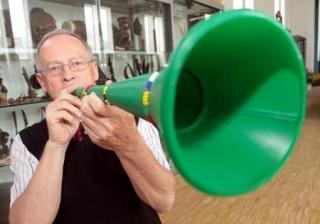
What is to be heard outside of the football stadiums and its vuvuzelas at the 2010 World Cup in South Africa? Probably kwaito music, i.e. percussive house beats combined with chants in Zulu, Xhosa and Township English. The motto is supposed to be: jabulani - bringing joy to everyone!
The South African music scene includes both popular (jive) and folk forms. Pop styles are based on two major sources, Zulu isicathamiya singing and harmonic mbaqanga. South Africa is very diverse, with many native African Ethnic groups as well as European and Indian peoples.
Christian missions provided the first organized musical training in the country, bringing to light many of the modern country's earliest musicians, including Enoch Sontonga, who wrote the national anthem Nkosi Sikelel' iAfrika. By the end of the nineteenth century, South African cities like Cape Town were large enough to attract foreign musicians, especially American ragtime players. African American spirituals were popularized in the 1890s by Orpheus McAdoo's Jubilee Singers.
In the early twentieth century, governmental restrictions on blacks increased, including a nightly curfew which kept the night life in Johannesburg relatively small for a city of its size (then the largest city south of the Sahara). Marabi, a style from the slums of Johannesburg, was popular.
Marabi was played on pianos with accompaniment from pebble-filled cans, often in shebeens, establishments that illegally served alcohol to blacks. By the 1930s, however, marabi had incorporated new instruments, guitars, concertinas and banjos, and new styles of marabi had sprung up. Among these were a marabi/swing fusion called African jazz and jive, a generic term for any popular marabi style of music.
South African popular music began in 1912 with the first commercial recordings, but only began booming after 1930 when Eric Gallo's Brunswick Gramophone House sent several South African musicians to London to record for Singer Records. Gallo went on to begin producing music in South Africa, beginning in 1933. His company, Gallo Record Company, remains the largest and most successful label in South Africa, having had acclaimed artists such as Solomon Linda, Ladysmith Black Mambazo, Miriam Makeba, Mahlathini and the Mahotella Queens and many more pass through the recording studios.
|
In the early twentieth century, Zionist Christian churches spread across South Africa. They incorporated African musical elements into their worship, thus inventing South African gospel music which remains one of the most popular forms of music in the country today.(source)
The 1930s also saw the spread of Zulu a cappella singing from the Natal area to much of South Africa. The style's popularity, finally producing a major star in 1939 with Solomon Linda's Original Evening Birds, whose "Mbube" ("The Lion") was probably the first African recording to sell more than 100,000 copies. It also provided the basis for two further American pop hits, The Weavers' "Wimoweh" (1951) and The Tokens' "The Lion Sleeps Tonight" (1961). Linda's music was in a style that came to be known as mbube. From the late 1940s to the 1960s, a harsh, strident form called isikhwela jo was popular, though national interest waned in the 50s until Radio Zulu began broadcasting to Natal, Transvaal and the Orange Free State in 1962 (see 1950s: Bantu Radio and pennywhistle for more details).
Also formed in this era, the Stellenbosch University Choir, part of the University of Stellenbosch, is the oldest running choir in the country and was formed in 1936 by William Morris, also the first conductor of the Choir. The current conductor is Andre van der Merwe. They specialise in a cappella music and consist of students from the University.
Afrikaans music was primarily influenced by Dutch folk styles, along with French and German influences, in the early twentieth century. Zydeco-type string bands led by a concertina were popular, as were elements of American country music, especially Jim Reeves. Melodramatic and sentimental songs called trane trekkers (tear jerkers) were especially common. In 1996 the South African Music scene changed from the Tranetrekkers to more lively sounds and the introduction of new names in the market with the likes of Nádine, Kurt Darren and Nicolis Louw. Afrikaans music is currently one of the most popular and best selling industries on the South African music scene.
After World War I, Afrikaner nationalism spread and musicians like accordionist Nico Carstens were popular.
By the 1950s, the music industry had diversified greatly, and included several major labels. In 1962, the South African government launched a development programme for Bantu Radio in order to foster separate development and encourage independence for the Bantustans. Though the government had expected Bantu Radio to play folk music, African music had developed into numerous pop genres, and the nascent recording studios used radio to push their pop stars. The new focus on radio led to a government crackdown on lyrics, censoring songs which were considered a "public hazard".
The first major style of South African popular music to emerge was pennywhistle jive (later known as kwela). Black cattle-herders had long played a three-holed reed flute, adopting a six-holed flute when they moved to the cities. Willard Cele is usually credited with creating pennywhistle by placing the six-holed flute between his teeth at an angle. Cele spawned a legion of imitators and fans, especially after appearing in the 1951 film The Magic Garden.
Groups of flautists played on the streets of South African cities in the 1950s, many of them in white areas, where police would arrest them for creating a public disturbance. Some young whites were attracted to the music, and came to be known as ducktails, rebellious juvenile delinquents who called the flute music kwela. Pennywhistle jive also spread outside of South Africa, through migrant workers, to Lesotho, Swaziland and most importantly Malawi.
|
Jazz had been popular in South Africa before the 1950s, especially swing music. Cape Province was a hotbed for South African jazz bands at the time, but Johannesburg became the capital for South African jazz. The city boasted bands like the Harlem Swingsters, and musicians like Ellison Temba, Elijah Nkanyane, Ntemi Piliso, Wilson Silgee and Isaac NkosiL.
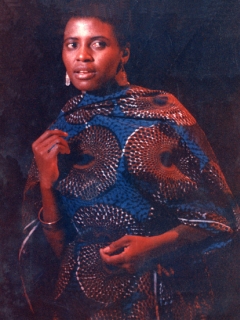
Female jazz vocalists were particularly popular in South Africa in the 40s and 50s, with Dolly Rathebe being the first star. She also starred in the first African feature film, 1948's Jim Comes to Jo'burg. Rathebe was followed by other singers, including Dorothy Masuka and, most famously, Miriam Makeba. Male singers were rarer, and included the Manhattan Brothers and the African Inkspots.
Miriam Makeba was a central figure in the African jazz scene throughout the 1950s, starring in King Kong, for example, a musical crossover called a "jazz opera" by the show's promoters. By the early 1960s, she was an international star and brought attention to South African apartheid. While abroad, the government revoked her right of return and she moved to the United States. There, she married Stokely Carmichael (of the Black Panthers) but was hounded by authorities and eventually left for Guinea. Makeba was far from the only jazz musician to flee South Africa; many stayed in the United States or the UK following concerts, and never returned to South Africa.
In the 60s, a smooth form of mbube called cothoza mfana developed, led by the King Star Brothers, who invented isicathamiya style by the end of the decade.
By the 1960s, the saxophone was commonplace in jive music, the performance of which continued to be restricted to townships. The genre was called sax jive and later mbaqanga. Mbaqanga literally means dumpling but implies home-made and was coined by Michael Xaba, a jazz saxophonist who did not like the new style.
The early 1960s also saw performers like bassist Joseph Makwela and guitarist Marks Mankwane add electric instruments and marabi and kwela influences to the mbaqanga style, leading to a funkier and more African sound.
Mbaqanga developed vocal harmonies during the very early 1960s when groups like The Skylarks and the Manhattan Brothers began copying American vocal bands, mostly doo wop. Rather than African American four part harmonies, however, South African bands used five parts. The Dark City Sisters were the most popular vocal group in the early 1960s, known for their sweet style. Aaron Jack Lerole of Black Mambazo added groaning male vocals to the female harmonies, later being replaced by Simon 'Mahlathini' Nkabinde, who has become perhaps the most influential and well-known South African "groaner" of the twentieth century. Marks Mankwane and Joseph Makwela's mbaqanga innovations evolved into the more danceable mgqashiyo sound when the two joined forces with Mahlathini and the new female group Mahotella Queens, in Mankwane's backing group Makhona Tsohle Band (also featuring Makwela along with saxophonist-turned-producer West Nkosi, rhythm guitarist Vivian Ngubane, and drummer Lucky Monama). The Mahlathini and the Mahotella Queens/Makhona Tsohle outfit recorded as a studio unit for Gallo Record Company, to great national success, pioneering mgqashiyo music all over the country to equal success.
1967 saw the arrival of Izintombi Zesi Manje Manje, an mgqashiyo female group that provided intense competition for Mahotella Queens. Both groups were massive competitors in the jive field, though the Queens usually came out on top.
The late 1960s saw the rise of soul music from the United States. Singers like Wilson Pickett and Percy Sledge were especially popular, and inspired South African performers to enter the field with an organ, a bass-and-drum rhythm section and an electric guitar.
|
By the 1970s, only a few long-standing mgqashiyo groups were well-known, with the only new groups finding success with an all-male line-up. Abafana Baseqhudeni and Boyoyo Boys were perhaps the biggest new stars of this period. The Mahotella Queens' members began leaving the line-up around 1971 for rival groups. Gallo, by far the biggest record company in South Africa, began to create a new Mahotella Queens line-up, recording them with Abafana Baseqhudeni. Lead groaner Mahlathini had already moved to rival label EMI (in early 1972), where he had successful records with backing team Ndlondlo Bashise and new female group the Mahlathini Girls. The new Mahotella Queens line-up over at Gallo found just as much success as the original Queens, recording on-and-off with new male groaners such as Robert Mbazo Mkhize of Abafana Baseqhudeni.
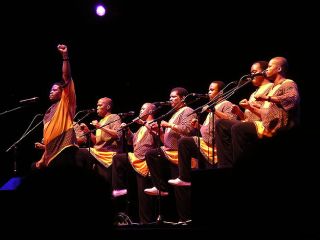
Ladysmith Black Mambazo, headed by the sweet soprano of Joseph Shabalala, arose in the 1960s, and became perhaps the biggest isicathamiya stars in South Africa's history. Their first album was 1973's Amabutho, which was also the first gold record by black musicians; it sold over 25,000 copies. Ladysmith Black Mambazo remained popular throughout the next few decades, especially after 1986, when Paul Simon, an American musician, included Ladysmith Black Mambazo on his extremely popular Graceland album and its subsequent tour of 1987.
With progressive jazz hindered by governmental suppression, marabi-styled dance bands rose to more critical prominence in the jazz world. The music became more complex and retained popularity, while progressive jazz produced only occasional hits, like Winston Ngozi's "Yakal Nkomo" and Dollar Brand's "Mannenburg".
During the punk rock boom of the late 1970s, UK punk-influenced South African bands like Wild Youth and Powerage gained a cult following, focused in Durban whilst in and around Johannesburg bands such as Dog Detachment and The Radio Rats had a similar following on the fringes of the music scene. Cape Town also had its own scene with the Safari Suits, House Wives Choice, Lancaster band, The News and Permanent Force (aka Private File after BOSS intervention) taking the lead, soon followed by the Rude Dementals, Fred Smith Band and Riot Squad. Many gigs took place at The Scratch Club (run by Gerry Dixon and Henry Coombes), UCT and other local venues,and some of the aforementioned bands passed through on tours.
In the middle of the 70s, American disco was imported to South Africa, and disco beats were added to soul music, which helped bring a halt to popular mbaqanga bands such as the Mahotella Queens. In 1976, South African children rebelled en masse against apartheid and governmental authority, and a vibrant, youthful counterculture was created, with music as an integral part of its focus. Styles from before the 1970s fusion of disco and soul were not widely regarded, and were perceived as being sanctioned by the white oppressors. Few South African bands gained a lasting success during this period, however, with the exception of the Movers, who used marabi elements in their soul. The Movers were followed by the Soul Brothers, and the instrumental band The Cannibals, who soon began working with singer Jacob "Mpharanyana" Radebe. The coloured (not black) band Flames also gained a following, and soon contributed two members (Blondie Chaplin and Ricky Fataar) to American band The Beach Boys. Harari arose in their place, eventually moving to an almost entirely rock and roll sound. One of Harari's members, Sipho 'Hotstix' Mabuse became a superstar in the 1980s.
The early 1980s brought popular attention on alternative rock bands like The Usual and Scooter's Union. In and around Johannesburg the growth of the independent music scene led to not just a surge of bands ranging from big names (relatively speaking) Tribe after Tribe, The Dynamics and The Softies through to smaller hopefuls What Colours, Days Before and No Exit, but also to the growth of a vibrant DIY fanzine scene with "Palladium" and "One Page to Many" two titles of note.
South African alternative rock grew more mainstream with two leading bands, Asylum Kids from Johannesburg and Peach from Durban having chart success and releasing critically acclaimed albums. The burgeoning music scene around Johannesburg saw a surge of small bands, inspired and informed by the UK DIY punk ethic, form and start performing at a growing number of venues from clubs the likes of Metalbeat, Bluebeat, King of Clubs, DV8 and Dirtbox to student run venues such as GR Bozzoli Hall and later the Free People Concert on the University of the Witwatersrand campus.
One artist of specific note to come from this era was James Phillips who was involved with several influential and important bands including Corporal Punishment; Cherry Faced Lurchers; and his Afrikaans alter ego Bernoldus Niemand (roughly translates as Bernard Nobody). With his Bernoldus Niemand character, James managed to cross the language division and influence a whole range of Afrikaans speaking musicians to the same punk ethic that had inspired him, and an important Afrikaans alternative rock scene grew from this influence.
During this period, the only Afrikaners to achieve much mainstream fame were Anton Goosen, a rock singer-songwriter, and Bles Bridges, an imitator of American lounge singer Wayne Newton.
|
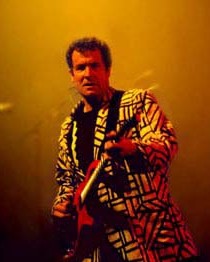
Johnny Clegg got his start in the 1970s playing Zulu-traditional music with Sipho Mchunu, and became prominent as the only major white musician playing traditional black music, achieving success in France as "Le Zoulou Blanc" (The White Zulu). The 1980s also saw a resurgence in rock and roll bands like The Helicopters, Petit Cheval, Sterling and Tellinger.
The most lasting change, however, may have been the importation of reggae from Jamaica. Following international superstar Bob Marley's concert celebrating Zimbabwe's independence in 1980, reggae took hold across Africa. Lucky Dube was the first major South African artists; his style was modelled most closely on that of Peter Tosh. Into the 1990s, Lucky Dube was one of the best-selling artists in South African history, especially his 1990 album Slave. The 90s also saw Jamaican music move towards ragga, an electronic style that was more influential on kwaito (South African hip hop music) than reggae. A group from the Free State called Oyaba also emerged during this period. Their best known hit songs are Tomorrow Nation, Paradise and Love Crazy. Reggae became quite popular and there was also a singer from KwaZulu-Natal, Sipho Johnson known as Jumbo who gave the likes of Lucky Dube quite a scare.
Bubblegum was a form of pure South African pop music that arose in the middle of the 1980s, distinctively based on vocals with overlapping call-and-response vocals. Electronic keyboards and synthesizers were commonplace. Dan Tshanda of the band Splash was the first major bubblegum star, followed by Chicco Twala. Twala introduced some politically-oriented lyrics, such as "We Miss You Manelo" (a coded tribute to Nelson Mandela) and "Papa Stop the War", a collaboration with Mzwakhe Mbuli.
The late 1980s saw the rise of Yvonne Chaka Chaka, beginning with her 1984 hit "I'm In Love With a DJ", which was the first major hit for bubblegum. Her popularity rose into the 1990s, especially across the rest of Africa and into Europe. Chaka Chaka's first major rival was Brenda Fassie, whose popularity began with 1993's Amagents; since becoming embroiled in numerous scandals as well as drug problems before her death in 2004. Jabu Khanyile's Bayete and teen heart-throb Ringo have also become very popular.
Afrikaans-language music saw a resurgence in the 1980s as the Voëlvry ("free as a bird" or "outlawed") movement reflected a new Afrikaans artistic counter-culture largely hostile to the values of the National Party and conservative Afrikanerdom. Spearheaded by the singer-songwriter Johannes Kerkorrel and his Gereformeerde Blues Band, the movement (which was named after Kerkorrel's 1989 regional tour) also included musicians Bernoldus Niemand (aka James Phillips) and Koos Kombuis. Voëlvry tapped into a growing dissatisfaction with the Apartheid system amongst white Afrikaans speakers, and thus Voëlvry represents the musical branch of opposition that was paralleled by literature and the arts. For an overview of the context of Voëlvry, see Elbie Adendorff's article on www.litnet.co.za, "Die Voëlvry-beweging se groter konteks."
In 1994, South African media was liberalized and new musical styles arose. Prophets of Da City became known as a premier hip hop crew, though a South Africanized style of hip hop known as kwaito soon replaced actual hip hop groups. In kwaito, synthesizers and other electronic instruments are common, and slow jams adopted from Chicago house musicians like The Fingers, Tony Humphries and Robert Owen are also standard. Stars of kwaito include Trompies, Bongo Maffin and Boom Shaka. The band Tree63 also emerged, first known for their hit single, "A Million Lights" and then further popularized by their version of Matt Redman's "Blessed Be Your Name".
The biggest star of 1990s gospel was Rebecca Malope, whose 1995 album Shwele Baba was extremely popular. Malope continues to record, in addition to performers such as Lusanda Spiritual Group, Barorisi Ba Morena, Amadodana Ase Wesile, Vuyo Mokoena and International Pentacoastal Church Choir, Lundi, Joyous Celebration, and the upcoming Scent From Above who have performed in Botswana occasionally.In 2000's Deborah Fraser has emerged as the best selling Gospel artist.Her albums have been audited to be in Top 5 selling in the country.In her album Isililo,Debrah Fraser sang in all South African languages like Venda,Shangaan,Sotho,Zulu and Xhosa.The industry has also been joined by the likes of Hlengiwe Mhlaba(whose Aphendule is popular) and Solly Moholo. :)
The period after 1994 saw a dramatic growth in the popularity of Afrikaans music. Numerous new young Afrikaans singers (soloists and groups) released CDs and DVDs and attracted large audiences at "kunstefeeste" (art festivals) such as the "Klein Karoo Nasionale Kunstefees - KKNK" in Oudtshoorn, "Aardklop" in Potchefstroom and "Innibos" in Nelspruit.
Apart from dozens of new songs being introduced into the Afrikaans music market, it became popular for modern young artists to sing old Afrikaans songs on a stage or in a pub, with crowds of young admirers singing along. The reason for the dramatic increase in the popularity of Afrikaans music can only be speculated about. One theory is that the end of Apartheid in 1994 also meant the end of the privileged position that the Afrikaans culture had in South Africa. After losing the privileged protection and promotion of the language and the culture by the State, the Afrikaans-speaking community seems to have spontaneously started embracing and developing their language and culture. This was due to pop artists like Steve Hofmeyr, Nádine, Kurt Darren, and Nicolis Louw bringing a new fresh sound in Afrikaans Music. Many of the songs sung and/or written by these artist are similar in sound to Euro dance music. Critics would claim that all an Afrikaans pop artist needs for a song to be popular is a catchy tune and an easy beat. This is due to the massive popularity of a form of couples dancing called "langarm" or "sokkie". The dance halls where this takes place could be considered as night clubs but they play almost exclusively Afrikaans pop music. The Afrikaans pop music market therefore generates tremendous demand for new material.
South Africa's first gothic rock band was The Awakening, formed in 1995 by vocalist, guitarist and producer Ashton Nyte. The band is credited in major national press as "South Africa's most successful Gothic Rock act and one of the top bands in the far broader Alternative scene" and headlined major national festivals throughout South Africa, including the country's largest music festival Woodstock, in addition to Oppikoppi and RAMfest. With more than a dozen top ten national singles between 1998 and 2007, The Awakening were the first goth-styled act to have major success in South Africa.
|
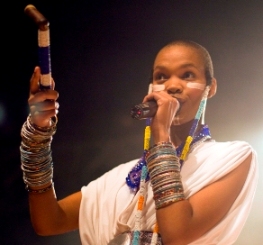
Kwaito is based on house music beats, but typically at a slower tempo and containing melodic and percussive African samples which are looped, deep basslines and often vocals, generally male, shouted or chanted rather than sung or rapped. Many consider it South Africa's unique implementation of hip hop.
In a resurgence that has been linked by some to freedom from Apartheid guilt, Afrikaans music saw a surge in new artists, album releases and sales after 2000. In 2004 an Afrikaans album (by balladeer Steve Hofmeyr was named best-selling album of the year. The massive purchasing power of the Afrikaner minority is partly to thank for this. In 2007 an Afrikaans song about Boer War general Koos de la Rey by Bok van Blerk became a hit amid fierce debate on whether it represented a call to arms for the reinstatement of Afrikaner rule or just expressed cultural nostalgia. While the boom in the Afrikaans pop industry has continued from the previous decade as the popularity of the arts festivals and dance halls have stayed strong, other Afrikaans music genres experienced a revival of sorts in the new millenium. Rock and alternative Afrikaans music had stagnated somewhat after the heady days of the "Voelvry" tour and the alternative movement. Signs of a revival could be found in the arrival of Karen Zoid on the music scene with her attention grabbing alternative sound. Shortly after a band of young punk rockers arrived on the scene called "Fokofpolisiekar". They were a revelation in that nobody had done punk rock in Afrikaans before. Their controversial name (translated as Fuck-off police-car), statements and behaviour certainly helped draw attention. This band certainly wasn't the only one to start the revival of Afrikaans Rock but they certainly seemed to be the symbol of it. Lead singer Francois Van Coke and songwriter Hunter Kennedy have gone on to explore other genres of music also not previously popular in Afrikaans and have found success. Shortly after the arrival of this and other rock acts, the first Afrikaans television music channel was opened which focused mainly on rock music. The Afrikaans (and English) rock and alternative music scene has been booming ever since. Bands like the industrial Battery9, Terminatrix, Nul, KOBUS and Thys Nywerheid continue to reinvent alternative Afrikaans music while acts like Die Antwoord and Jack Parow are taking the Afrikaans rap movement pioneered by Brasse van die Kaap to the next level.
The South African drum and bass scene began in the mid nineties. In 2000, events such as Homegrown became a prominent fixture in Cape Town and a launching platform for international and local artists such as Counterstrike, SFR, Niskerone, Tasha Baxter, Anti Alias and Rudeone. Other regular events include It Came From The Jungle in Cape Town and Science Friksun in Johannesburg.
A weekly Sublime drum and bass radio show is hosted by Hyphen on Bush Radio.
South African psytrance is a form of darker psychedelic trance music that started and is produced mostly in South Africa. Unlike the Russian dark psytrance, South African psytrance is more rhythmic, melodic and danceable, yet keeps the 'nasty-like' attitude.
Metal is rapidly growing in popularity in the country with thousands of supporters and musicians. Metal bands tour all over the country visiting many different metal clubs such as Tempo's, Asylum, Zeplins, Full Moon Alternative Loungue and The Doors in the Gauteng area; Burn in Durban; Gandalfs, The Eye Of Horus and Klein Libertas Theatre in the Cape Town area and Jesters in Port Elizabeth. One of South Africa's bands originating from Edenvale, Autumn Sun, played in Bulgaria alongside Cradle of Filth.
Bands from the Gauteng area, in particlular MetalMorphosis, by far the top selling metal act globally - 45 differnt countries, leading the charge. Others include Agro, Mesadoth, New Found Disorder, Bile of Man, Where Martyrs Dare, Facing The Gallows, Still Black At Sunrise, Dangerous Dave on fire, Unforsaken Truth, Enemy Escape Route, The Dead Will Tell, ...and Chaos, Guns Go Bang!, Ingram, Red Helen, The Hammer of Redemption, Gun Down Goliath, Reason To Live, Chromium, Haggis And Bong, Knave, Kudegra, We Shall Embrace and Kill The Messenger;
Hailing from Mpumalanga ‘The Secunda Knights’ – Riddare av Koden and the Frail;
From Durban - Contrast the Water, Theatre Runs Red, Beyond the Pale and Pledge Defiance;
From Bloemfontein - Dieversion and Wintersoul;
And all the way down south in the Cape Town area, Day Turns Night, Mind Assault, A Walk With the Wicked, Azrail and Enmity. This list is in no means representative of the variety and number of bands active locally. Metal4Africa - The global gateway to African Metal, launched by two individuals from the Cape Town region, has become a very respected name to all in the South African metal scene. In 2008 they released the first South African live compilation DVD, featuring the above mentioned Cape Town bands, as well as, Warthane, The Warinsane, Erebus, Contrast the Water and Betray The Emissary.
|
Afrikaans death metal deserves special mention. Following the success of Voice of Destruction in the 1990s, Francois Blom formed K.O.B.U.S., and a recent compilation, KOPSKOOT!, showcases some of the most prominent Afrikaans metal bands, such as Battery9, Van Coke Cartel, Terminatrix, Insek, Breinskade, and Nul.
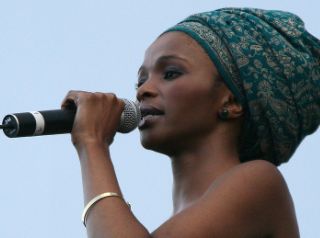
The South African music scene has continued to flourish in the 2000s. The decade has seen the rise of Xhosa singer Simphiwe Dana, whose success has seen her hailed as the "new Miriam Makeba", with her unique combination of jazz, pop, and traditional music. Another similar young singer is Thandiswa Mazwai, originally a kwaito singer with Bongo Maffin. Thandiswa combined local hip-hop rhythms with traditional Xhosa sounds, creating a rich textured style. 2006 saw the rise of Shwi Nomtekhala, a duo combining mbaqanga rhythms and maskandi sounds. The duo have become one of the most influential new acts on the music scene today, outselling even kwaito artists. Their debut album Wangisiza Baba was a major hit in the country. Cape Town based female artist Verity has been recognized internationally for innovation in the music industry for selling 2000 copies of her album Journey before it was actually recorded. Another up and coming group "2 and a Half Secondz" is on the rising from Delft in Cape Town in 2009.
Ladysmith Black Mambazo remain one of the world's most popular choral groups and still retain popularity in South Africa, with their latest offering being the highly-praised Ilembe (2007/2008). The legendary group boasts three grammy wins. The Mahotella Queens also remain high-selling, and - with the death of long-time groaner Mahlathini in 1999 - have recorded several new albums, including their 2007 release Siyadumisa (Songs of Praise). 2008 has also seen the return of a former singer with the Mahotella Queens, Irene Mawela. Mawela appeared on thousands of mbaqanga and mgqashiyo recording sessions well throughout the 1960s and the 1970s, recording mainly for Gallo Record Company, often as part of the line-ups of the Mahotella Queens, the Mgababa Queens, Izintombi Zomgqashiyo, and also under her own name (though sometimes as Irene & The Sweet Melodians, or Irene & The Zebra Queens). In 1983 she left the company to record as a solo artist, with a successful Venda-traditional release Khanani Yanga. Mawela left the music business in the late 1980s, but returned in November 2007 with a brand new album called Tlhokomela Sera, which combines modern contemporary sounds with pure gospel music, making what Mawela calls "gospel jive".
The music scene in South Africa is focused around 4 major areas, Johannesburg, Cape Town, Durban and Bloemfontein. One of the characteristics of the scene is the strong sense of community which sees artist, promoters and venues all actively involved in developing the local talent. Bloemfontein's music focus is centred predominantly around the metal and afrikaans genres. Johannesburg, Cape Town and Durban are far more wide ranging in the genres of music covered by bands and artists. Cape Town is a hot bed for the underground music scene, generally held to be more experimental than the music produced in the other centres.
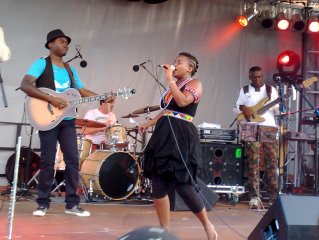 The introduction of the South African Music Awards (SAMA), intended to recognise accomplishment in the South African recording industry has raised the awareness of local artists and bands. The awards are given in various categories, including album of the year, best newcomer, best artists (male and female) and the best duo or group. South African Music Award winners include Karen Zoid, Freshlyground, Tasha Baxter and Seether.
South Africa has several annual music festivals including MotherFudd, Oppikoppi, Rocking the Daisies and Splashy Fen. The music festivals cater to different genres and styles of music. Motherfudd is an exclusively metal festival held early in the year. The 2008 Motherfudd festival had a line up of 30 bands with 2 stages and took place near Hartebeespoort. The Oppikoppi festival started in 1994 and is held in the Limpopo Province of South Africa, near the mining town of Northam. Originally a rock festival, Oppikoppi has expanded to include other genres. Splashy Fen is an annual Easter festival held on a farm near Underberg in KwaZulu-Natal, with a focus on rock and reggae music. Rocking the Daisies is an annual music festival which is held outside Cape Town in Darling on the Cloof wine estate. It was established in 2005 with a focus upon rock music & is a 'green' festival for which it has garnered awards.
South Africa has a growing field of music journalism. Print based publications focussed on South African music are SAM (South African Music & Entertainment tabloid), and South African Music News. Internet based journalism can be found on SAMusic.co.za, Speakerbox, Strum, The Rock Finder, More Than Music and Amplify.
Traditionally styled music is generally appellated as "Sotho-traditional" or "Zulu-traditional", and has been an important part of the South African music business since the 1930s. Vocal and concertina records were released with a call-and-response style and a concertina used as a counterpoint to the lead vocal. Following World War 1, cheap imported concertinas arrived in South Africa, especially the Italian brand bastari.
See alsoBibliography
Further reading
External links |
By the 1970s, the concertina of Sotho-traditional music was replaced with an accordion and an electric backing band. This wave of neo-traditional performers was led by Tau Oa Matsheha.
The Zulu people adopted the guitar following its introduction by the Portuguese in the sixteenth century, and was locally and cheaply made by the 1930s. John Bhengu was the first major Zulu guitarist, earning a reputation in 1950s Durban for his unique ukupika style of picking (as opposed to traditional strumming). Bhengu's song format, which includes an instrumental introduction (izihlabo), a melody and spoken praise (ukubonga) for a clan or family, was widely used for a long time in Zulu-traditional music. Bhengu, however, switched to the electric guitar in the late 1960s and began recording as "Phuzushukela". His popularity exploded, and Zulu-traditional music entered a boom.
Since the 1970s, the concertina has returned to Zulu-traditional music, while diverse influences from pop music and drum and bass were added. Vusi Ximba's Siyakudamisa (1992) was perhaps the most memorable Zulu-traditional album of the later twentieth century, and drew controversy for racy, comedic lyrics.
Tsonga traditional music was first recorded in the 1950s by Francisco Baloyi for Gallo, and showed a largely African style influenced by Latin rhythms. Mozambiquan musicians Fani Pfumo and Alexander Jafete became prominent studio performers in the 1950s and into the next decade, making a style called Portuguese Shangaan. In 1975, however, Mozambique became independent and a Shangaan radio station was opened by Radio Bantu, leading to the abandonment of Portuguese elements from this style.
More modern Tsonga bands, such as General MD Shirinda & the Gaza Sisters play a style called Tsonga disco, featuring a male lead vocalist backed by female singers, a guitar, keyboard or synth and disco rhythms. Thomas Chauke & the Shinyori Sisters (Tusk Records) have become probably the best-selling band of any neo-traditional style. The most popular Tsonga musician, however, has arguably been either the pop singer Peta Teanet or the equally successful Penny Penny.
Pedi-traditional music is principally harepa and is based on the harp. The German autoharp arrived in South Africa in the nineteenth century, brought by Lutheran ministers proselytizing among the Pedi. Harepa has not achieved much mainstream success in South Africa, though there was a brief boom in the 1970s, led by Johannes Mohlala.
Venda-traditional music was also recorded when black music in South Africa was being recognised. The late 1960s (and, more significantly the late 1970s) saw a boom in Venda-speaking artists. This was mainly influenced by the launch of a Venda radio station.
Irene Mawela (who had been singing in the 1960s and 1970s with groups like Mahotella Queens, Sweet Sixteens and the Dark City Sisters) made a huge mark in traditional and contemporary Venda music, despite vocal recordings in Zulu, Sotho and Xhosa languages. Mawela's 1983 release, Khanani Yanga, was one of the most successful Venda-traditional music albums of that year. After some lean years, Mawela returned to the South African music scene with Tlhokomela Sera, released in December 2007. Mawela's recent numbers like "Mme Anga Khotsi Anga" and "Nnditsheni" are very popular.
Other artists include Ramavhea, Mundalamo, Eric Mukhese, and Adziambei Band. The latter band is still continuing with their successful run, after releasing another album recently, which was widely accepted. Having more than 20 years in the industry Colbert Mukwevho has done much in Venda music. In 80s his hits like Kha tambe na thanga dzawe, i do nera rothe and saga-saga were exremely popular. In 2006 he proved his strength with the comeback of his album Mulovha namusi na matshelo' hits like ndo takala hani and zwa mutani wavho remain very popular to Venda and Pedi's. Colbert enjoy the airplays of Phalaphala fm and huge support form his fans. He grew up in a family of music. His father Christopher Mukwevho then leader of Threlling Artist-the popular band used to feature him at young age. The tracks like Mukhada proved that Colbert was talented at young age. He is the father of the icon in making Percy Mukwevho.

 From Wikipedia, the free encyclopedia
[en.wikipedia.org/wiki/Music_of_South_Africa].
From Wikipedia, the free encyclopedia
[en.wikipedia.org/wiki/Music_of_South_Africa].All text is available under the terms of the GNU Free Documentation License. Date: June 2010. |
Photo Credits:
(1) FIFA 2010 logo,
(3) Ladysmith Black Mambazo,
(8) Simphiwe Dana
(12) Wikipedia Logo
(by Wikipedia);
(2) South African Flag,
(5) Hugh Masekela,
(6) Johnny Clegg,
(7) Thandiswa Mazwai,
(10) Vuvuzela
(unknown);
(4) Miriam Makeba
(from website);
(9) Freshlyground (by Karsten Rube);
(11) GNU Logo (by GNU Project).
|
To the German FolkWorld |
© The Mollis - Editors of FolkWorld; Published 07/2010
All material published in FolkWorld is © The Author via FolkWorld. Storage for private use is allowed and welcome. Reviews and extracts of up to 200 words may be freely quoted and reproduced, if source and author are acknowledged. For any other reproduction please ask the Editors for permission. Although any external links from FolkWorld are chosen with greatest care, FolkWorld and its editors do not take any responsibility for the content of the linked external websites.
